


A grievance must be brought before a court by filing a petition setting out the grounds of the complaint and seeking redress, not by marching to the court and submitting a memorandum. A march and the submission of a memorandum, however, are legitimate ways of presenting a problem before the government. These are the ABCs of democracy. The political parties here are well aware of these basic principles.
The issue concerning the Election Commission's decisions is already before the Supreme Court in the form of a petition. In these circumstances, even seeking permission to meet the Chief Justice in person and submit a memorandum was inappropriate. No court could naturally grant such permission. Opposition parties and others failed to show the judgement needed to understand this and instead marched to the Supreme Court. Such actions can only weaken democracy rather than strengthen it and undermine the constitutional institutions that keep the country functioning.
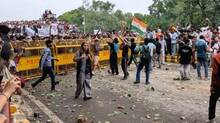
Ordinary citizens will ultimately have to suffer the consequences. It is therefore difficult to fault the Supreme Court Bench headed by Chief Justice Surya Kant for strongly criticising the march to the Supreme Court led by Congress leader Rahul Gandhi and the INDIA bloc, as well as the commotion on the court premises. They asked for the reprimand they received.
Everyone in a democratic country has the right to protest and express dissent. Protests can be held on the streets against the government. But it is quite another matter to turn a protest against the dignity and independent functioning of the country's highest court. Such actions threaten the very foundations of democracy. That is precisely why the Chief Justice had to make it unequivocally clear that no one could intimidate or threaten the judiciary.
“We are not sitting in ivory towers. We know what statements they make outside and what they say in court. We know everything." The Chief Justice's words are a clear warning to political leaders. Such immature moves can only raise suspicions among impartial observers that some people are being paid to stage protests to convince the world that India's constitutional institutions are weak.
If there have been irregularities in the voters' list, demands can be made to correct them. If eligible voters have been left out, that can be pointed out. Protests can also be organised. But any attempt to turn such protests against India's highest judicial institution must be firmly resisted and opposed.
Following the protest march, a post demanding the Chief Justice's resignation appeared on the official social media account of the Kerala Pradesh Congress Committee (KPCC). It was withdrawn after the controversy it triggered. Such immature tactics can deal a serious blow to political parties in the eyes of the public.
The doors of the Supreme Court remain equally open to protesters and those who oppose them. The court must not be dragged into unnecessary controversies. If those who lead the way lose their bearings, everyone following them is likely to lose theirs as well. The damage caused by political leaders going astray can have serious consequences for the country's cohesion, dignity and the survival of democracy. It would be better for them to realise, even if belatedly, that there are no shortcuts to reaching the hearts and minds of the people.











 HOME
 LATEST
 NOTIFIED NEWS
 POLL
 KERALA
 EDITORIAL
 INDIA
 WORLD
 BUSINESS
 CINEMA
 SPORTS
 LIFESTYLE
 SPECIAL
 SCIENCE & TECHNOLOGY

 |