


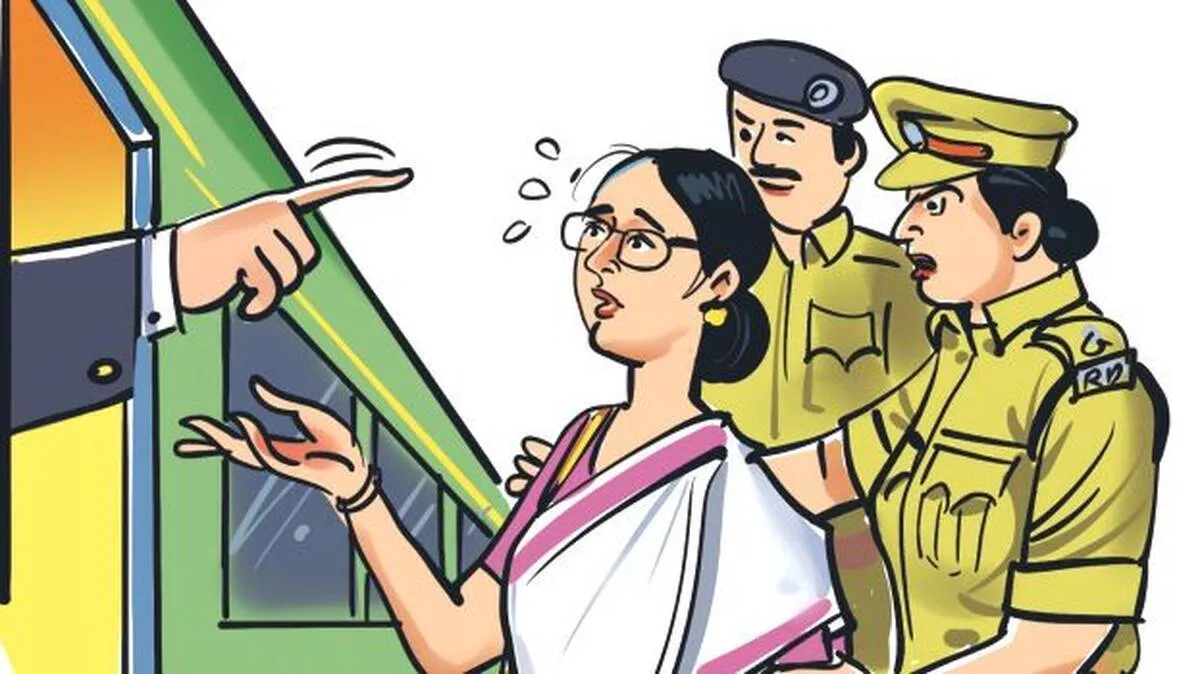
Violence and harassment against women on moving buses and trains are nothing new. Earlier, women avoided travelling alone at night. They used to travel at night mostly with groups or with their families. Those times of women going through ordeals silently when treated with sexual innuendo are over. Women today respond to whatever vile commentary thrown at them.
Days ago, a few bus staff gang-raped a girl on a bus in the national capital. Crime lurks in darkness, and, unfortunately, such harassment continues despite the court giving capital punishment in the Nirbhaya case.
The vile acts faced by women passengers travelling at night need to end. The culprits should be given strict punishment. But what if those who are supposed to provide protection behave without conscience? The incident of a woman being thrown off a train in the middle of the night despite having a reservation ticket tainted the reputation of the Railways. The railway authorities arrested the passenger and harassed her because she was travelling without a ticket. The passenger, who had to endure severe humiliation and mental torture, did not remain silent. After losing her contract job in the government due to this case, K. Jayasmita, a native of Erumapetty, Thrissur, approached the Human Rights Commission.
The Commission Chairman, Justice Alexander Thomas, ruled that the Railways had acted unfairly towards the complainant, and that she should be given compensation of Rs 2 lakh.
The unfortunate incident occurred on July 30, 2023, while she was travelling from Wadakkanchery to Thiruvananthapuram. The woman had been allotted berth number 41 in the S-4 compartment. When she reached the berth, it was occupied. When she met the TTE, she was told that the ticket had been cancelled online. The TTE suggested that she take another berth and pay a fine of Rs. 500. The woman expressed surprise and demanded to know who cancelled her ticket, but the TTE did not reply.
The woman also pleaded that she not be asked to deboard the train since it was midnight. When the train reached Aluva, the passenger was handed over to the RPF. They arrested her and released her on bail. Realising their mistake later, the railways withdrew the case.
The officer on the booking site had mistyped a digit in the mobile phone number that the passenger had written on the reservation form. This was discovered during an investigation by the commercial manager. The message regarding the reservation was sent to a different number. The person who received the message cancelled the reservation online as he had not booked the ticket.
The problem would not have worsened if the responsible officials or the TTE had communicated well with the passenger. The tendency to portray someone as an offender without examining the facts led to the deplorable incident.
Railways mint crores in profits daily, and they should realise that women passengers are the lion's share who contribute to their revenue. It would be appreciated if officials treated them with at least a little respect.














 HOME
 LATEST
 NOTIFIED NEWS
 POLL
 KERALA
 EDITORIAL
 INDIA
 WORLD
 BUSINESS
 CINEMA
 SPORTS
 LIFESTYLE
 SPECIAL
 SCIENCE & TECHNOLOGY

 |