


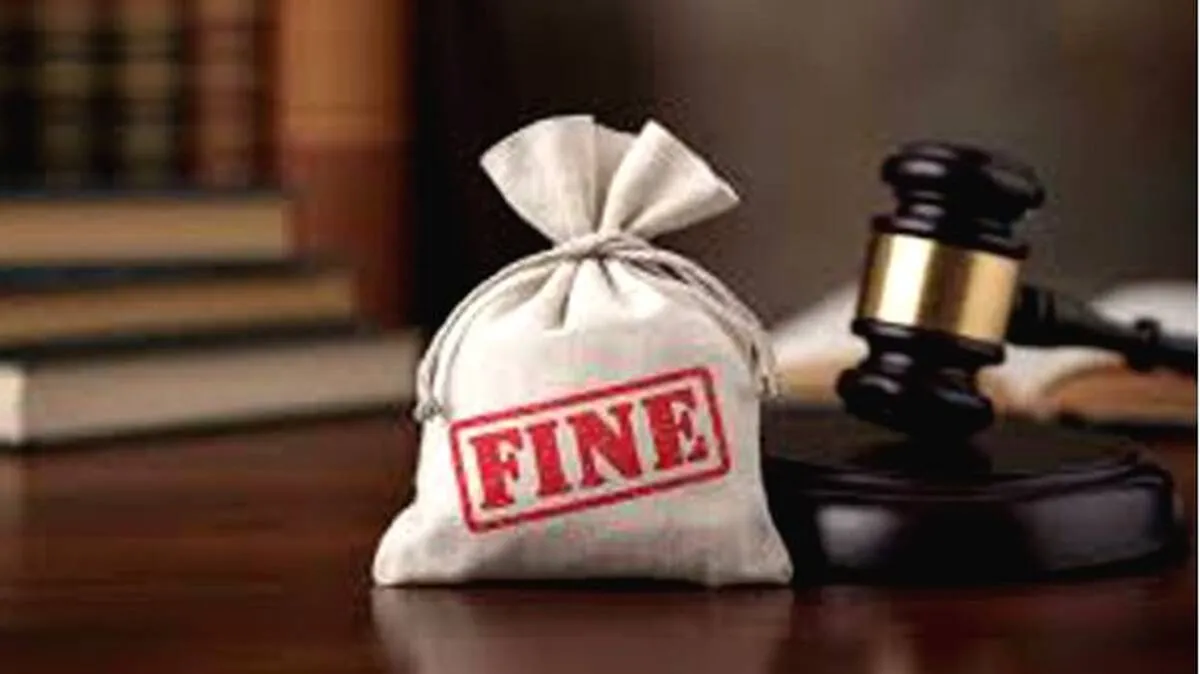
Between September 9 and 15, Kerala Police collected Rs 1,08,43,600 from vehicle owners across the State as fines for illegal parking. Most of these fines were for parking vehicles by the roadside. The stark reality is that even major cities such as Thiruvananthapuram, Ernakulam and Kozhikode do not have adequate parking facilities. This is relevant in the context of the Supreme Court's recent order directing that the vehicles of those who fail to pay traffic fines be seized. A Bench comprising Justice J.B. Pardiwala and Justice K.V. Viswanathan, hearing a public interest litigation concerning road safety, also directed that vehicle-related online services should not be made available until the fine is paid. It ordered that renewal of registration certificates and transfer of vehicle ownership be stopped, and that fitness and PUC certificates not be issued. The court further directed that such vehicles be blacklisted on the Parivahan portal.
The court issued the order taking into account the petitioners' submission that Rs 23,000 crore remained to be collected across the country in e-challan fines. The same Bench had earlier observed that unpaid fines could be added to electricity bills. It had also observed that when faced with the prospect of electricity disconnection, people would themselves come forward to pay the amount. Considering the number of lives lost in road accidents across the country, the Supreme Court's order can only be described as welcome.
However, the respective State governments have several matters to consider while implementing it. The most important among them is ensuring that the State's roads are fit for use. Reports about roads lying broken and riddled with potholes, and about unfortunate travellers losing their lives after falling into them, regularly appear in the media. Unfortunately, beyond the reactions that follow when such incidents become news, there does not appear to be any lasting intervention from the State Public Works Department. The Motor Vehicles Department and the police, which enforce traffic laws, also have a responsibility to provide the basic infrastructure needed to prevent such violations. In our State, it often seems that one of the President, the Prime Minister or some other dignitary has to visit for major roads to be repaired.
When such dignitaries travel by road, potholes along the route are filled, and the road is temporarily spruced up. When it comes to fines, however, there are targets, and the traffic police will photograph a vehicle even when it has been parked by the roadside simply because there is no other place to park. Local self-government institutions can take the initiative to provide better parking facilities in all cities. Some municipalities are doing so, but considering the ever-increasing number of vehicles, these facilities are still completely inadequate.
While implementing the court's order, those with outstanding fines should also be given sufficient time and some relief to clear their dues. Kerala has allowed a concession of up to 50 per cent on fines imposed through e-challans up to March 31, 2026. The concession applies to fines received before March 31, 2026, that had not been referred to court. These can be settled from November 1, 2026, to January 31, 2027. It would be appropriate if this benefit were extended to fines outstanding as of the date on which the court issued its order. There is no dispute over the need to collect the fines. Those facing larger amounts should also be provided with an option to pay them in instalments.












 HOME
 LATEST
 NOTIFIED NEWS
 POLL
 KERALA
 EDITORIAL
 INDIA
 WORLD
 BUSINESS
 CINEMA
 SPORTS
 LIFESTYLE
 SPECIAL
 SCIENCE & TECHNOLOGY

 |