

THIRUVANANTHAPURAM: Kerala is closely watching the new welfare department planned by the V D Satheesan government for senior citizens. As the Chief Minister mentioned, many are now asking whether Kerala will introduce a system similar to Japan’s “Ikigai” model for elderly welfare. There is also curiosity about whether the project can become as successful as the Kerala-Japan drinking water initiatives.
This is the first time in India that a separate welfare department for senior citizens is being introduced at the state level. The move was one of the major election promises made by the UDF.
Japan introduced a separate elderly welfare department in January 2001, nearly 25 years ago. Around 29 percent of Japan’s population is senior citizens, while Kerala currently has about 19 percent elderly population. The average life expectancy in Japan is 85 years, compared to around 80 years in Kerala. Experts believe Kerala may soon reach levels similar to Japan in terms of ageing population.
Kerala first began focusing seriously on elderly welfare during the government led by V S Achuthanandan. In 2007, the government introduced a senior citizens policy. Although there was a decision in 2008 to form a Senior Citizens Council, it was never properly implemented.
Several projects were also proposed at that time, including a commission for legal support, the “Vayomithram” scheme for free medicines and counselling, and day-care centres for elderly people to gather and socialise. However, many of these initiatives did not function effectively.
Separate minister for elderly welfare?
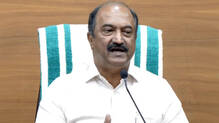
With the creation of a separate department for elderly welfare, the state may also need a dedicated minister for the sector. At present, all such matters are handled by the Social Welfare Department. Chief Minister V D Satheesan said the new department would not be just a technical change but the beginning of a new policy approach. He added that the aim is to make elderly care a direct responsibility of the state, similar to the Japanese model.
How the Japanese Model works
Japan’s elderly welfare system focuses not just on extending life through treatment, but also on helping senior citizens remain healthy, active, and happy.
Facilities and benefits provided in Japan include community centres where elderly people can gather, free travel in public transport, free medical treatment, small government-funded lifts for elderly people living in multi-storey houses, treatment for memory loss and age-related illnesses, support for sleep disorders, special insurance schemes, rehabilitation centres, home-based healthcare services, palliative care, and support for elderly people to continue living in places they prefer.
Experts say Kerala may eventually need similar systems, including geriatric hospitals, geriatric volunteers, and specialised elderly care services.
Creating happiness for senior citizens
The proposed welfare approach also focuses on making elderly people happier and socially active.
Possible measures include friendship groups and social clubs, parks and public spaces for senior citizens, exercise and wellness programs, food kits for elderly people, special training programs for geriatric nurses and doctors, and research systems to develop robotic pets and assistive technologies for senior citizens.






 HOME
HOME LATEST
 NOTIFIED NEWS
 POLL
POLL KERALA
  EDITORIAL
  INDIA
INDIA  WORLD
WORLD  CINEMA
  SPORTS
  LIFESTYLE
  SPECIAL
  SCIENCE & TECHNOLOGY
 |
|