


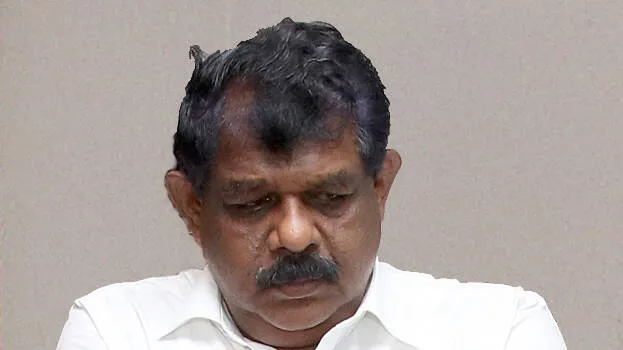
The majority of human frauds and forgeries go undetected. Even if caught, cases are rarely filed. Even if cases are filed, very few lead to punishment. However, society generally welcomes a verdict that punishes those responsible for a crime that is proven to be linked to forgery and fabrication. The reason for that relief is the belief that lies should not rule the country, which is one of the fundamental pillars of humanity. The fact that a person has finally been sentenced to punishment after more than three and a half decades for the crime of tampering with evidence, despite the support of all kinds of influences, has further strengthened the faith of the people in the justice system.
The punishment meted out to a person who committed a crime while he was a lawyer and later became a member of the cabinet will be discussed repeatedly in the annals of judicial history, especially due to the specificity of the evidence material in the case. In any case, evidence material becomes one of the biggest validations that proves the crime. Although it is the police who find the evidence materials, it is the court that keeps them until the end of the trial of the case and for a specified period. It is generally believed that no tampering can be done with them when they are kept in the custody of the court. However, what happened in the case of Antony Raju is completely contrary to that belief.
When the defendant's purse was returned, the defendant's underwear, which was evidence material, was also received as part of the application written and signed by lawyer Antony Raju. This is a serious mistake by the clerk, who is the custodian of the evidence material, in the court. Jose, a court employee and co-accused, has been sentenced to three years in prison in the same case.
The role played by forensic evidence in Antony Raju's conviction in this case is very important and cannot be ignored. The forensic examination revealed that the application to the court to get the accused's belongings back was in Antony Raju's handwriting. Similarly, the forensic examination report also stated that the underwear returned by the lawyer after keeping it in his possession for four months had new stitches as part of the 'cutting it short'. The lawyer returned the underwear in which the drugs were hidden after 'making it smaller' because of his oversmartness to save the drug smuggler. Antony Raju has received the punishment fate has given him for this oversmart thinking and tampering.
This is an unusual case. The accused, who was acquitted in Kerala in a drug case, was imprisoned after five years in Australia in a murder case. It was another accused who was with him who revealed the manipulation of the underwear that led to his escape from Kerala. That information reached the CBI through Interpol and later in the court, and the case was revived. Antony Raju could not stop the trial of the case even after going to the Supreme Court. He has been disqualified from the post of MLA due to the three-year sentence. This will change only if the verdict is stayed on appeal. In any case, the saying that a thief will be caught one day has also come true with this verdict.














 HOME
HOME LATEST
 NOTIFIED NEWS
 POLL
POLL KERALA
  EDITORIAL
  INDIA
INDIA  WORLD
WORLD  CINEMA
  SPORTS
  LIFESTYLE
  SPECIAL
  SCIENCE & TECHNOLOGY
 |
|