


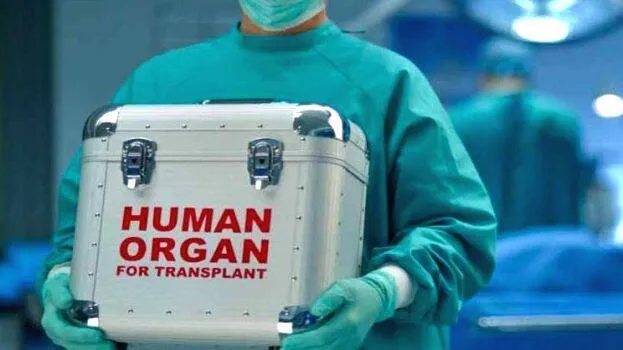
Kerala is often seen as a model for other Indian states and even foreign countries in many areas. Its achievements in education and healthcare are especially notable. Many organisations and volunteers regularly visit the state to study these successes.
However, when it comes to organ donation, Kerala is not leading the way. In fact, registration figures show that the state is lagging behind several other states. Last year, 10,404 people registered their willingness to donate organs, compared to just 3,000 registrations the previous year. This increase was mainly due to awareness campaigns conducted by the Kerala State Organ and Tissue Transplant Organisation (K-SOTTO).
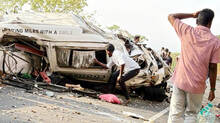
Stories of organs being transplanted at remarkable speed from brain-dead patients, saving multiple lives, often make headlines. Recently, Ernakulam General Hospital achieved a major milestone by becoming the first general hospital in the country to perform a heart transplant surgery. One such inspiring case was that of 47-year-old Shibu, a native of Chirakkara in Kollam, who suffered brain death after a road accident. Shibu, who worked at a hotel in Kazhakkoottam, fell from his scooter while returning home in Kollam. Though he was admitted to the Thiruvananthapuram Medical College Hospital, doctors later confirmed brain death. Despite their immense grief, his family showed great courage and agreed to donate his organs.
Shibu’s heart was transplanted to Durga Kami, a young woman from Nepal. One of his kidneys was donated to a patient at Thiruvananthapuram Medical College, while the other went to Travancore Medical College, Kollam. His liver was transplanted at KIMS Hospital, and his two corneas were given to patients at the Regional Institute of Ophthalmology. His skin was donated to the Skin Bank at Thiruvananthapuram Medical College. The organ retrieval surgery lasted about four hours. His heart was flown to Ernakulam in a helicopter arranged by the Home Department, with police support provided on the Chief Minister’s instructions. The entire process was coordinated by K-SOTTO. Death can strike at any moment in life, leaving families in deep pain and loss.
Often, it is people from ordinary backgrounds who come forward to donate organs. While many are mentally willing, misconceptions and false propaganda prevent them from giving consent. Rumours about organ mafia and claims that organs are taken even from accident victims discourage many families from agreeing to donation. Across India, the highest number of organ donation registrations have been recorded in Maharashtra (1.12 lakh) and Rajasthan (91,283). In Kerala, Thiruvananthapuram has the highest number of registrations, with 2,306 people. Organ donation is nothing to fear. Life becomes meaningful when we think about the well-being of others as well. When one realises that death does not have to be the end, there is no hesitation in donating organs. Even when a life ends, passing on its light to save other lives is a noble act.









 HOME
HOME LATEST
 NOTIFIED NEWS
 POLL
POLL KERALA
  EDITORIAL
  INDIA
INDIA  WORLD
WORLD  CINEMA
  SPORTS
  LIFESTYLE
  SPECIAL
  SCIENCE & TECHNOLOGY
 |
|