


The direction from which we look at an object is very important. The shape and appearance of that object will change according to our view. Only by summing the views from all sides can we get the object's overall appearance. This is often impossible. This applies to recording history, too. The British, while recording history, had a myopic view of things. The Indians will do it in a subjective way that favours them. While British historians call the event of 1857 the Sepoy Mutiny, Indian historians mark it as the First War of Independence.
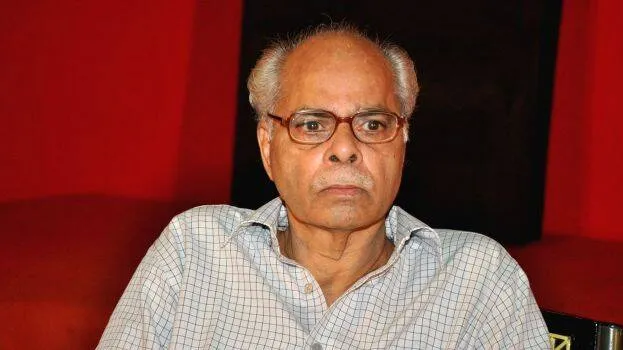
Facts are not something to be distorted with. The documentation of objective history is for posterity. In that way, Dr K.N. Panikkar, who passed away the other day, was a historian who recorded events scientifically and objectively. He viewed history mainly through the Marxist school of thought. Many can disagree with that perspective, but cannot help but acknowledge his scholarship and historical narrative prowess. Writing history was his politics and path of struggle. He had acquired extraordinary skills in English and history through extensive reading from a young age. Panikkar, who dedicated his life to writing and teaching history, remained a crucial presence in contemporary society through his writing, speeches and teaching.
Panikkar was most deeply influenced by Marxist views of the Italian historian Antonio Gramsci. Panikkar’s historical writing was a synthesis of these two schools of thought. His historical writings had traces of straightforwardness that he considered mandatory to do justice to his job. During his college days, Panikkar was an active activist and leader of the Left student movement. After becoming a history teacher at JNU, he engaged in intellectual activities to create a new awareness among students about Left ideas. He worked closely with historians like Romila Thapar and R.S. Sharma in the Indian Council of Historical Research and the Indian Historical Congress. When the Babri Masjid was demolished, he was among those who reacted strongly and prepared a pamphlet highlighting the historical background of the mosque.
Panikkar analysed history from the Malabar riots to the Babri Masjid issue, and wrote most of his works in English. Panikkar wrote about ten valuable history books and edited eight. Dr K.N. Panikkar passed away when the council was preparing to organise an international history conference to celebrate his Navathi (90th birthday). He had been avoiding public events for some time due to ill health. A year ago, Chief Minister Pinarayi Vijayan presented the Kanhangad Madhavan Foundation award at his residence. The passing away of Dr K.N. Panikkar, a prominent historian and former Vice-Chancellor of the Kalady Sree Shankaracharya Sanskrit University, is a great loss to the intellectual arena of Kerala.







 HOME
HOME LATEST
 NOTIFIED NEWS
 POLL
POLL KERALA
  EDITORIAL
  INDIA
INDIA  WORLD
WORLD  CINEMA
  SPORTS
  LIFESTYLE
  SPECIAL
  SCIENCE & TECHNOLOGY
 |
|