

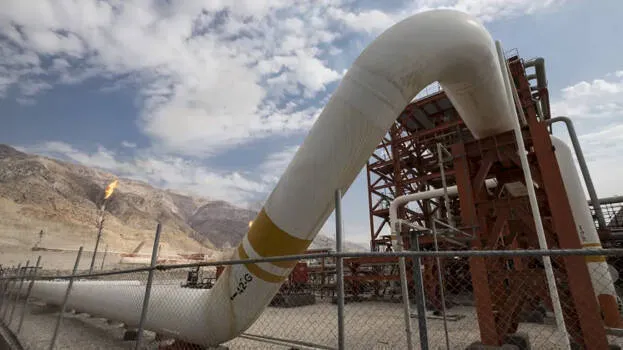
TEHRAN: Tensions in the Middle East have reached a critical breaking point following an Israeli airstrike on Iran's critical energy infrastructure. On Wednesday, Israeli jets, reportedly with U.S. coordination, targeted natural gas facilities in the South Pars gas field and Bushehr province. Iranian state media confirmed the strikes caused significant fires at the site, which is the world's largest gas reservoir.
In response, Tehran has declared a "new phase" of economic warfare. The Iranian government warned that it will strike five major energy facilities across Saudi Arabia, the UAE, and Qatar in the coming hours. Regional allies have been placed on high alert as Iran signals that its "red lines" have changed, threatening global energy security in retaliation for the damage to its domestic production.
The IRGC has issued an urgent ultimatum, identifying several high-priority energy assets as direct targets for imminent retaliation. These include Saudi Arabia’s SAMREF refinery and the Jubail petrochemical complex, the Al Hosn gas field in the UAE, and Qatar’s Ras Laffan refinery and Mesaieed petrochemical complex. Iran has signaled that these strikes will occur within the coming hours in response to the 'economic aggression' displayed by the U.S. and Israel."
Tehran has confirmed that while several natural gas facilities were damaged in the Israeli strikes, no casualties were reported. Emergency teams successfully extinguished the fires at the affected sites. Meanwhile, the Israeli military has formally acknowledged the operation, stating its air force targeted strategic infrastructure. This escalation follows reports that Iran's Intelligence Minister, Esmail Khatib, was killed in a separate Israeli strike. Qatar has since condemned the attack on the gas facilities; Foreign Ministry spokesman Majed Al-Ansari characterised the action as 'dangerous and irresponsible,' warning of the risks to regional and global energy security.







 HOME
HOME LATEST
 NOTIFIED NEWS
 POLL
POLL KERALA
  EDITORIAL
  INDIA
INDIA  WORLD
WORLD  CINEMA
  SPORTS
  LIFESTYLE
  SPECIAL
  SCIENCE & TECHNOLOGY
 |
|