



No judge possesses the authority to impose sentences beyond those strictly prescribed by law. The legal code clearly defines the maximum penalty for every offence, taking into account the specific circumstances of the crime. In India, the death penalty remains the most severe punishment, reserved exclusively for "rarest of rare" cases. While capital punishment is still utilised in specific instances, imprisonment and fines remain the standard forms of sentencing.
In some international jurisdictions, community service is integrated into sentencing. However, the fundamental principle—codified by legal experts and ratified by Parliament—is that no punishment should violate an individual’s dignity or public standing.
The Indian penal system is entirely secular and operates independently of religious mandates. These are foundational legal principles. However, the existence of judges who disregard these standards to impose arbitrary punishments is a stain on the judicial system.
In a recent and concerning development, Justice Panigrahi of the Odisha High Court has been scrutinised for issuing orders that reflect deep-seated caste discrimination against Dalit and tribal defendants. Between April and September 2025, the judge issued fifty orders that reportedly compromised the dignity of marginalised communities. His bail conditions—none of which are found in the written law—included requiring defendants to sweep and clean police stations and banks.
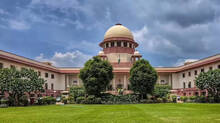
The Supreme Court has struck back, describing these bail conditions as illegal and indicative of blatant caste discrimination. A bench comprising Justice Surya Kant and Justice Joymalya Bagchi criticised these conditions, noting they expose systemic prejudice against marginalised sections of society.
Taking suo motu notice of the matter, the court issued a stern warning: The state judiciary must refrain from imposing conditions that carry casteist undertones or foster social division.
The Supreme Court further clarified that affected defendants may approach the Odisha High Court to have these illegal bail conditions formally quashed.
These harsh conditions were imposed across various cases, ranging from theft to financial disputes. In one particularly egregious instance, a woman involved in a loan default case was ordered to mop the floors of the private bank branch from which she had borrowed money.
The court-ordered cleaning duty was scheduled between 6:00 AM and 10:00 AM for three hours daily. The defendant was required to perform this labour for a period ranging from one to three months.
Had such a directive been issued by a rural panchayat in an underdeveloped region, it might have been attributed to a lack of legal awareness. However, coming from a High Court judge, the act is viewed as inexcusable. This is not a failure of knowledge, but rather a reflection of a mindset that refuses to acknowledge the humanity of Dalit and Adivasi communities.
While the Constitution guarantees an equal and caste-free society, these incidents—though isolated—serve as a grim reminder that true social equality remains a distant goal.













 HOME
HOME LATEST
 NOTIFIED NEWS
 POLL
POLL KERALA
  EDITORIAL
  INDIA
INDIA  WORLD
WORLD  CINEMA
  SPORTS
  LIFESTYLE
  SPECIAL
  SCIENCE & TECHNOLOGY
 |
|