


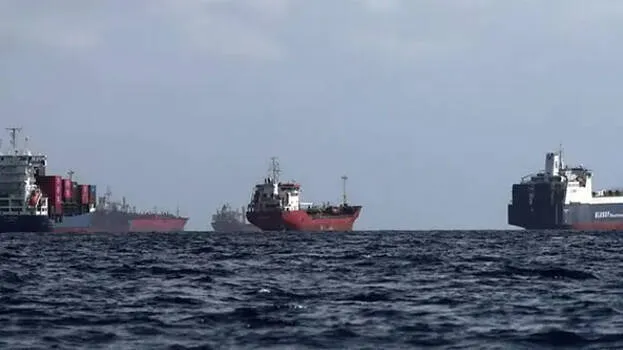
NEW DELHI: An energy crisis is on the brink of putting the world in a standstill following the uncertainty at the Strait of Hormuz. This has disrupted 86 per cent of the east-west crude oil traffic. According to data provided by maritime analytics firms Windward and Kpler, the waterway is currently at a standstill. On March 1, only three tankers passed through Hormuz.
The daily average for the Strait was 19.8 million barrels per day in 2026, which has now plummeted to 2.8 million barrels. On March 2, this dropped again to just one small tanker and one cargo ship. Currently, there are 706 non-Iranian ships stuck on both sides of the strait. This includes 334 crude oil tankers and 372 other ships. Hundreds of ships are waiting aimlessly in the Gulf of Oman and the open sea.
The crisis has shaken global markets. As the crisis deepened, Brent crude oil prices rose by 10 per cent to $80 a barrel. European gas prices have risen by more than 40 per cent following attacks on the Ras Tanura refinery in Saudi Arabia and the LNG plant in Qatar.
If the blockade in the Strait of Hormuz continues, there is a possibility of a long queue of ships and the oil supply getting completely disrupted. Currently, the insurance costs and freight rates of ships in the Gulf region are rising sharply. This will directly lead to an increase in fuel prices worldwide. Due to the crisis in the Strait of Hormuz, oil refineries in Asia and Europe are busy finding alternatives. Currently, efforts are being made to bring in oil from West Africa, Brazil and Russia.
This situation will directly affect China and India, which are heavily dependent on crude oil from Gulf countries. India may restrict the export of petrol and diesel to ensure fuel availability in the domestic market. There is a possibility of increasing oil imports from Russia. If the supply disruption persists, restrictions, including LPG rationing, are on the cards.




 HOME
HOME LATEST
 NOTIFIED NEWS
 POLL
POLL KERALA
  EDITORIAL
  INDIA
INDIA  WORLD
WORLD  CINEMA
  SPORTS
  LIFESTYLE
  SPECIAL
  SCIENCE & TECHNOLOGY
 |
| 


