


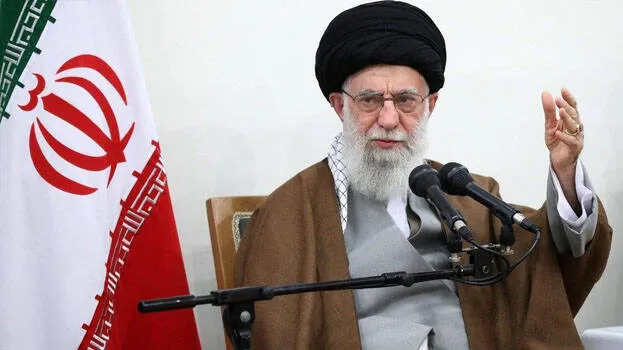
TEHRAN: West Asia has been under the shadow of war since the killing of Iran's Supreme Leader Ayatollah Ali Khamenei. The conflict has directly and indirectly affected countries around the world. With both Iran and US President Donald Trump reportedly unwilling to hold talks, global uncertainty continues to grow. Khamenei's death has deeply shocked Iran.
According to the latest revelations, the decision and preparations to assassinate Khamenei had been in place for years. The operation was reportedly carried out after long-term surveillance by Israel. Even the smallest areas of the capital, Tehran, were closely monitored. Traffic cameras and mobile signals were carefully studied and allegedly disabled as part of the plan.
After gaining control of traffic camera systems, the attackers tracked Khamenei’s travel routes, the places he visited, and the people who accompanied him. By studying footage collected over several days, they reportedly analysed his daily routine and lifestyle. Mobile signals around Pasteur Street in Tehran, where Khamenei’s office is located, were also targeted. Some communication towers were partially disabled to disrupt the security forces’ communication.
Israel's signals intelligence unit, Unit 8200, along with Mossad, and the US intelligence agency CIA, were involved in the operation. The assassination was carried out after confirming that Khamenei would attend a key meeting. Beyond the display of military power, the operation highlights the growing importance of cyber strategy in modern warfare.




 HOME
HOME LATEST
 NOTIFIED NEWS
 POLL
POLL KERALA
  EDITORIAL
  INDIA
INDIA  WORLD
WORLD  CINEMA
  SPORTS
  LIFESTYLE
  SPECIAL
  SCIENCE & TECHNOLOGY
 |
| 


