


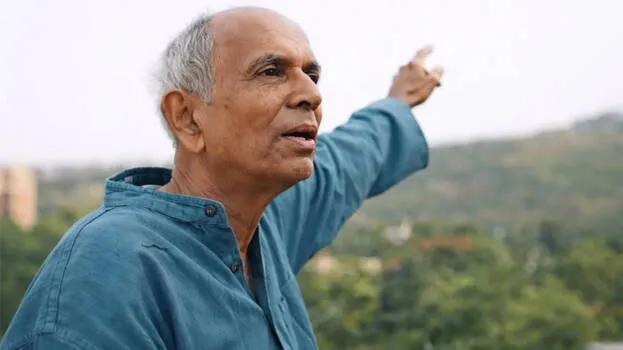
NEW DELHI: Madhav Gadgil prepared the report on the protection of the ecologically sensitive area of the Western Ghats in 2011 based on the principle that man should be subject to nature. The report could not be implemented because the authorities succumbed to pressure from those who were interested in environmental exploitation. Gadgil had said that he tried to prevent natural disasters like the Wayanad landslide from occurring in the Western Ghats.
In the introduction to the 328-page report, Gadgil wrote: Kalidasa compares the Western Ghats, the mother of many rivers like Godavari, Krishna, Netravati, Kaveri, Kunti, Vaiga and others, to a beautiful maiden. Mount Agasthya is her head, Annamalai and Nilgiris are her breasts, and the vast mountain ranges of Canara and Goa are her body. The northern Sahyadris are her legs. The robe of that beauty, clad in a rich green saree, is torn today. It has been torn by the greed of the elite. It has been eaten by the poor. What has happened to the hill region, the backbone of the environment, is a great tragedy.
Madhav Gadgil has said that the aim of the report was to arrange human settlements in the Western Ghats in a way that is compatible with nature. Its recommendations could have prevented disasters caused by human intervention, including mining and large-scale construction, to some extent. Gadgil also warned that if precautions were not taken, Kerala would be exposed to more major disasters. He had also said that the quarry lobby had portrayed his report badly in Kerala.
The committee recommended that most of the 1,60,000 square kilometers of the Western Ghats, spread across six states of the country, be considered environmentally sensitive. This included 25,000 square kilometers of land containing 633 villages in Kerala. The report also insisted that there should be no construction that would affect the environment. This created concern among the people of the hilly areas. Politicians took advantage of it.
Gadgil wanted to directly inform the hill people of the facts in his report, which was prepared in English. In his discussions with the tribal groups, he tried to convince them that the report was for their survival.
Kasturirangan Report in Cold Storage
The ecologically sensitive area in the Western Ghats was reduced to less than 30 percent in the report submitted by the Kasturirangan Committee, appointed by the then UPA government instead of the Gadgil Report. That too could not be implemented. It did not get political support due to the fear of losing the hilly votes. In the Kasturirangan Report, the ecologically sensitive area in Kerala was reduced to 13,000 square kilometers and the number of inhabited areas to 123. Although the BJP came to power in 2014, criticising the previous Congress government for its negligence in protecting the Western Ghats, the final notification remains a challenge.




 HOME
HOME LATEST
 NOTIFIED NEWS
 POLL
POLL KERALA
  EDITORIAL
  INDIA
INDIA  WORLD
WORLD  CINEMA
  SPORTS
  LIFESTYLE
  SPECIAL
  SCIENCE & TECHNOLOGY
 |
| 


