



Those familiar with political history know that it is not uncommon for predictions and calculations to falter during elections. However, the "stunning victory" of the UDF in the elections to the 16th Legislative Assembly has surpassed even their own expectations and outpaced all exit poll results. It reflects the "diamond-like brilliance" of an extraordinary and unprecedented political shift.
From the very start of the counting process, the blow dealt to the LDF was evident. The defeat—where 13 out of 20 contesting ministers were unseated and the front was reduced to a mere 35 seats—leaves the CPI(M) and the Left Front with many profound lessons to ponder.
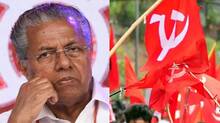
The impact on the party and the front is immense, particularly considering that even Chief Minister Pinarayi Vijayan—in his stronghold of Dharmadam—could only secure a lead in the final rounds. This narrow victory carries the distinct shadow of a defeat. The UDF did more than just breach the hull of the Left Front ship; they created a turbulent sea where the "Captain" himself had to struggle to reach the shore. Securing 102 seats, the UDF has achieved a magnificent victory that instils both pride and passion. This is also a shining testament to the precise calculations and courageous stances of leaders like V.D. Satheesan and former Opposition Leader Ramesh Chennithala.
Before delving into further lessons, one could not find a better example of how the public reacts when they have had enough of a government. There are few complaints regarding the development activities or welfare programs of the Pinarayi Vijayan-led Left government. Therefore, this shocking defeat was likely not born out of a standard resentment toward governance, but rather a sharp response from the true masters—the people—against the arrogance and defiance shown by the party and its leaders. The "Captain" seemed oblivious to the impending danger, a reality his circle of sycophants likely kept hidden from him.
Any government should look beyond the "official truths" provided by high-ranking bureaucrats and instead understand the pulse of the people, making decisions that stand by them. Only such rulers find a lasting place in the public heart. This election reflected a deep-seated public rage specifically directed at the chief executive, rather than just general anti-incumbency; otherwise, the Chief Minister would not have trailed for the first six rounds of counting. While Pinarayi Vijayan and ministers like K.N. Balagopal, Saji Cherian, and P.A. Mohammed Riyas were among the seven to win, many of the CPI(M)’s invincible fortresses, including those in Kannur, crumbled.
A massive consolidation of minority votes, combined with a collective decision by both the new and old generations that change was inevitable, gifted the UDF this unbelievable victory. While CPI’s K. Rajan, G.R. Anil, and P. Prasad emerged victorious, J. Chinchu Rani faced defeat. The loss of K.B. Ganesh Kumar in Pathanapuram proved that the public has no patience for "feudal politics" that challenge the common man. As the UDF wave swept through Kannur, Kozhikode, Kollam, and Thiruvananthapuram, many of the CPI(M)’s legacy seats were lost.
With more than half the cabinet defeated, the stage is set for a massive overhaul and new political equations within Kerala's Left politics. The victories of G. Sudhakaran in Alappuzha, Kunjikrishnan in Payyanur, and T.K. Govindan in Taliparamba—who all contested after declaring the need for timely corrections within the Left—must be specially evaluated by the CPI(M) central leadership.
The BJP winning three seats for the first time in the history of Kerala Assembly elections is not just a setback for those who boasted they would never "open an account," but a sign of the BJP's growing investment in the state's future. Rajeev Chandrasekhar in Nemom, V. Muraleedharan in Kazhakoottam, and Gopakumar in Chathannoor have secured their places in the Assembly. Unlike O. Rajagopal’s previous win, which was attributed to his unique personal appeal, this time it is a clear political victory for the BJP.
Standing out from the rest was Chandy Oommen’s victory in Puthuppally by 52,907 votes. His campaign—conducted without a single flex board or poster, travelling house-to-house on a bicycle—is an exemplary model for those who have total faith in the people. Another notable feature of this election was the decimation of the Kerala Congress (Mani) led by Jose K. Mani. Meanwhile, the Muslim League, winning 23 seats, successfully sent its first female member, Fathima Thahiliya, to the Assembly.
Victory and defeat are natural in elective politics. The UDF must now be careful not to lose its way in the euphoria of this massive win. Leaders should strive for moderation in their rhetoric and avoid provocations. It is hoped that the UDF leadership will make decisions—especially regarding the Congress Chief Minister—that honour the people's trust without sparking controversy.
Beyond Kerala, a fierce anti-incumbency wave swept through Tamil Nadu and Bengal. In Tamil Nadu, actor Vijay’s TVK became a "super hit," leaving the ruling DMK struggling. In Bengal, the BJP crossed the 200-seat mark, dealing a blow to the Trinamool Congress and defeating Mamata Banerjee. The BJP also secured a hat-trick in Assam, while the NDA ensured power in Puducherry. In short, these Assembly elections have clearly taught a lesson on "how not to rule" if one desires a continuation of power.













 HOME
HOME LATEST
 NOTIFIED NEWS
 POLL
POLL KERALA
  EDITORIAL
  INDIA
INDIA  WORLD
WORLD  CINEMA
  SPORTS
  LIFESTYLE
  SPECIAL
  SCIENCE & TECHNOLOGY
 |
|