


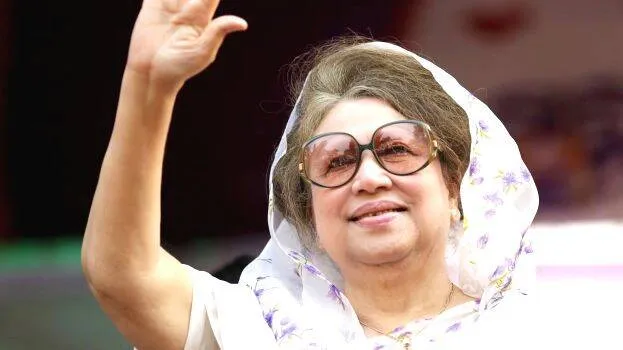
NEW DELHI: Khaleda Zia, commonly known as Begum Khaleda Zia, despite having roots in undivided India, made her career out of sheer anti-India sentiment. During her tenure (1991–96, 2001–06), separatist activities thrived in the northeastern states, including Assam.
The separatists received support from Pakistan via Bangladesh. Khaleda Zia, who was active in politics in 1982, continued to support her husband, General Ziaur Rahman's idea of keeping bonhomie with Pakistan-China and keeping distance from India. She deployed anti-India sentiment as fuel for her rise in politics. Zia blamed Sheikh Hasina's Awami League's affinity to India and presaged that it would weaken Bangladesh. Zia, in most of her political speeches, made sure not to miss her usual anti-India rhetoric.
Khaleda was also responsible for the dispute over the Chicken Neck area, which connects the rest of India with the northeastern states, and the Farakka Dam dispute that began in 1976.
The stance she took didn’t take so long to give dividends as Zia emerged to power in the 1991 general election. When she visited India in 1992, Zia tried to reach an agreement with the then Prime Minister Narasimha Rao to share the waters of the border rivers. But destiny chose Sheikh Hasina to sign the historic Ganga Water Treaty in 1996. When the BNP returned to power in 2001, bilateral relations with India hit the nadir. In 2015, Prime Minister Narendra Modi met Khaleda when he visited Bangladesh.










 HOME
HOME LATEST
 NOTIFIED NEWS
 POLL
POLL KERALA
  EDITORIAL
  INDIA
INDIA  WORLD
WORLD  CINEMA
  SPORTS
  LIFESTYLE
  SPECIAL
  SCIENCE & TECHNOLOGY
 |
|