


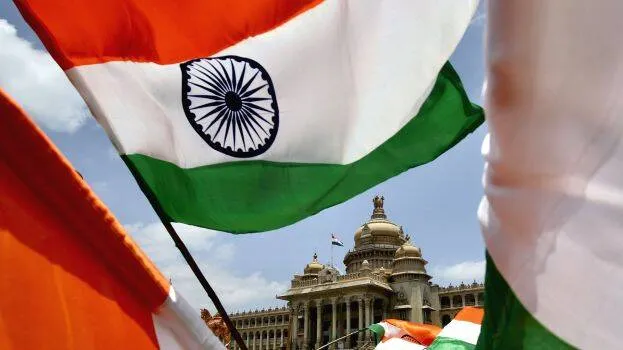
Wealth and power often attract many friends and relatives. But when a person loses everything and faces difficulties, even those who once appeared close may behave like strangers. People of olden times often say that true friends are known during times of crisis. This idea applies not only to individuals, but also to countries. As the war between Iran and the forces led by Israel and the United States continues, Iran now seems to have only a few supporters. At this stage, India has displayed its humanitarian and compassionate character as a nation by allowing the requested assistance.
Three Iranian ships were present in the Indian Ocean. In the first week of March, when the United States and Israel launched attacks on Iran, these ships faced danger. The vessels had earlier taken part in the International Fleet Review in the Indian Ocean and had also participated in MILAN 2026, a naval exercise organised by the Indian Navy in Visakhapatnam.
One of the ships, IRS Dena, was reportedly destroyed and sunk in an attack by an American submarine. The Sri Lankan Navy recovered the bodies of 87 people from the ship, while 32 others were rescued. Another Iranian vessel was given assistance by Sri Lanka and allowed to anchor on its coast. With the risk of attacks at any moment in the Indian Ocean, Iran requested shelter for its third ship, IRS Lavan. India granted permission in the first week of March itself.
The ship reached the coast of Kochi a few days after receiving permission. India’s External Affairs Minister S. Jaishankar said the decision to allow the ship to come to Kochi was made on humanitarian grounds. There had been criticism on social media claiming that the attack on Iran’s ship in the Indian Ocean was also a setback for India. However, such criticisms were largely based on speculation rather than facts. Responding to the criticism, Jaishankar reminded that foreign military presence in the Indian Ocean has existed for a long time. Apart from giving shelter to the ship, India also officially expressed condolences on the death of Iran’s Supreme Leader Ali Khamenei. Foreign Secretary Vikram Misri visited the Iranian Embassy in New Delhi and signed the condolence book.
India has always followed such humanitarian approaches, regardless of which side is involved. This tradition makes India stand out among nations. The country is known for being honest, courageous, and compassionate in its approach. In response, Iran’s representative in India said that the friendship between India and Iran is more than 3,000 years old and will continue in the future as well. Wars may end sooner or later, but friendship is not something that begins or ends in a single day. It is a continuous relationship. India’s diplomatic approach reflects this truth.











 HOME
HOME LATEST
 NOTIFIED NEWS
 POLL
POLL KERALA
  EDITORIAL
  INDIA
INDIA  WORLD
WORLD  CINEMA
  SPORTS
  LIFESTYLE
  SPECIAL
  SCIENCE & TECHNOLOGY
 |
|