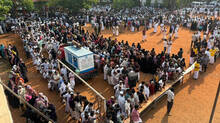



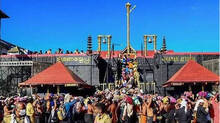
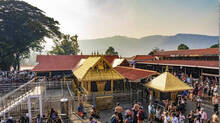
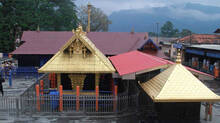
NEW DELHI: The Travancore Devaswom Board (TDB) has submitted a formal written statement to the Supreme Court regarding the restriction on women’s entry into the Sabarimala temple. The Board clarified its position by stating that Sabarimala is a unique “denominational temple” with the constitutional right to manage its own internal religious affairs. This submission, prepared by senior advocate Abhishek Manu Singhvi and filed by Standing Counsel P.S. Sudheer, argues that various Supreme Court precedents support the temple's status as a distinct religious entity. The Board further contended that while thousands of Ayyappa temples exist, the Sabarimala shrine is the only one where the deity resides in the specific form of a Naishtika Brahmachari (eternal celibate), justifying its unique customs under Article 26(b) of the Constitution.
In a separate affidavit, Tantri Kandararu Rajeevaru emphasized that centuries-old rituals and practices must remain intact. He stated that a devaprasnam—a ritual used to interpret the deity's will—indicated that the ban on women between the ages of 10 and 50 should continue. According to the Tantri, these instructions are considered authoritative messages from a divine power and are essential to maintaining the deity's celibacy. He argued that these restrictions are based on tradition and should not be viewed as gender-based discrimination, noting that decisions overriding these tantric rulings would deeply hurt the sentiments of the faithful.
Supporting these views, the Pandalam Kottaram Nirvahaka Sangham and the Nair Service Society (NSS) also informed the Supreme Court that long-standing religious customs must be protected. Their arguments suggest that the judiciary should not be the final arbiter of religious traditions that have been followed for generations. With all parties having submitted their arguments, the Supreme Court is set to begin the formal hearing on April 7.










 HOME
HOME LATEST
 NOTIFIED NEWS
 POLL
POLL KERALA
  EDITORIAL
  INDIA
INDIA  WORLD
WORLD  CINEMA
  SPORTS
  LIFESTYLE
  SPECIAL
  SCIENCE & TECHNOLOGY
 |
|