

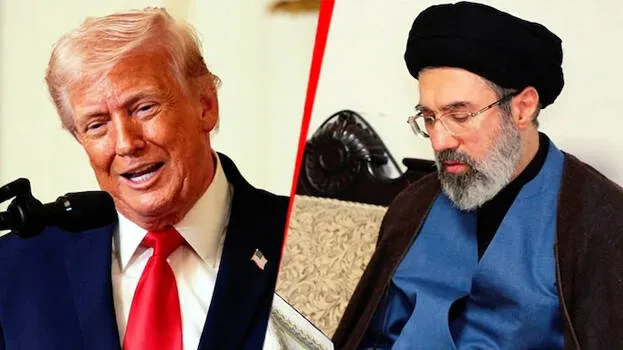
TEHRAN / WASHINGTON: The Middle East stands on the precipice of total war today as U.S. President Donald Trump’s 48-hour ultimatum to Iran approaches its final hours. With a deadline set for 5:30 AM IST (Midnight GMT), the President has warned that the United States is prepared to "completely destroy" Iranian strategic assets if the Strait of Hormuz—the world’s most critical oil chokepoint—is not immediately reopened to international shipping.
Despite the looming threat, Tehran remains defiant. Foreign Ministry Spokesperson Esmail Baghaei stated late Monday that Iran "will not give in to ultimatums and threats," insisting that the waterway will remain closed until a permanent cessation of hostilities is guaranteed.
Diplomatic efforts are moving at a feverish pace to avert a catastrophic escalation. Under the leadership of U.S. Vice President JD Vance and Pakistani Army Chief Field Marshal Asim Munir, a framework known as the "Islamabad Accord" has been presented to both Washington and Tehran.
While Washington is reportedly reviewing the proposal, Iran has officially rejected any deal that includes a "temporary" reopening of the Strait or specific time limits on its sovereignty.
The diplomatic tension is mirrored by a brutal air campaign. Early Monday morning, joint U.S. and Israeli airstrikes struck deep within Iranian territory, dealing a severe blow to the Islamic Revolutionary Guard Corps (IRGC).
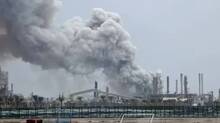
Initial reports suggest that more than 25 people were killed in the latest wave of strikes. Beyond the military targets, significant damage was reported at a natural gas distribution center near Tehran, leading to widespread power outages. Residential areas in Eslamshahr and the holy city of Qom were also caught in the crossfire, according to local sources.
As the clock ticks toward the 5:30 AM deadline, the global community watches the Persian Gulf with bated breath. Oil prices have already surged to record highs, and military analysts warn that if the "Islamabad Accord" fails tonight, the region may enter a conflict from which there is no easy return.
"We have conveyed our positions. We are ready for peace, but we are not ready for surrender." — Esmail Baghaei, Iranian Foreign Ministry











 HOME
HOME LATEST
 NOTIFIED NEWS
 POLL
POLL KERALA
  EDITORIAL
  INDIA
INDIA  WORLD
WORLD  CINEMA
  SPORTS
  LIFESTYLE
  SPECIAL
  SCIENCE & TECHNOLOGY
 |
|