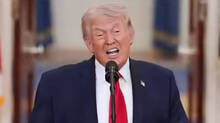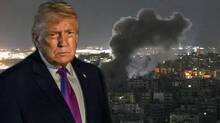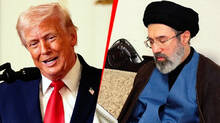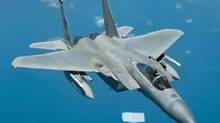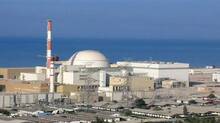


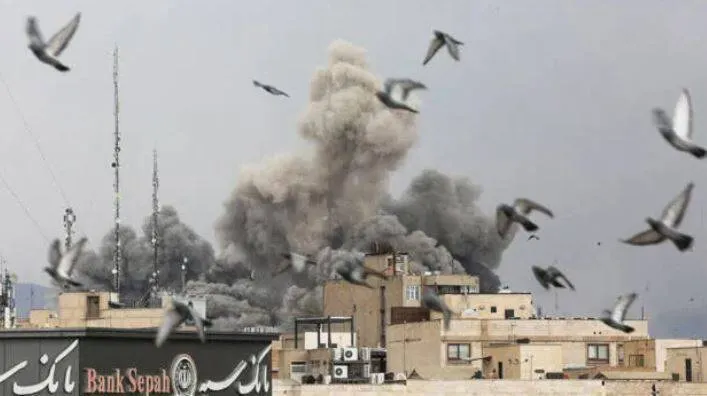
The US–Israel–Iran war that began on February 28, 2026, has upended the entire world order. It is being assessed less as a traditional war between states and more as a testing ground for the wars of the future. The reason the US and Israel cite for attacking Iran is the concern that Iran’s nuclear facilities and missile stockpiles pose a global threat. This is especially significant for Israel.
Israel also claims that it is attacking Iran for its own survival. Israeli Prime Minister Benjamin Netanyahu had warned that Israel would use any means to prevent Iran from acquiring nuclear weapons. Another reason for the hostility is Iran’s financial and military support to extremist organisations like Hamas, Hezbollah, and the Houthis, which have declared Israel their enemy and are fighting it. The US and Israel also allege that Iran is carrying out large‑scale uranium enrichment. The attacks that these Iran‑backed militant organisations carry out on oil tankers and on American military bases in the Gulf region are provoking the United States.
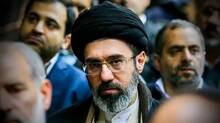
Moreover, the US–Israel alliance claims that it will create conditions for the people of Iran, now ruled repressively by a religious regime, to decide their own destiny. Ultimately, the main goal of the US and Israel is to install in Iran a government that is favourable to them. The Iran–Israel–US conflict has created far-reaching consequences across the region. With disruptions in Gulf oil production and shipping routes, global energy prices have already risen. When Iran blocked traffic through the strategically vital Strait of Hormuz, through which about 20 per cent of global oil trade passes, crude oil and LNG became scarce. For India, the war has become a threat to the country’s energy security, inflation, and overall economic stability.
The monthly economic review released by the Ministry of Finance on March 6, 2026, points out that the war could threaten global energy supply chains and increase inflation and the country’s import bill. In the 2026 financial year, India is importing 88.6 per cent of its crude oil requirements, and 46.9 per cent of that import comes from West Asia itself. Rating agencies predict that the war may affect India’s growth. It is forecast that in the 2026–27 financial year, India’s growth could be hit by up to 1 percentage point. Rating agencies also point out that, with international oil prices rising, this could push up inflation. According to an Ernst & Young report, India’s growth in the new financial year is projected to be between 6.8 per cent and 7.2 per cent.
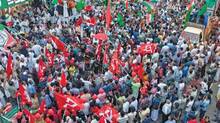
At present, we are seeing anti‑war sentiment spreading even within the United States, which itself began the Iran war. The war has affected the US just as it has the West Asian countries. Higher fuel prices have clearly driven up prices and transport costs in America as well. Reports suggest that the war has adversely affected the US economy itself.
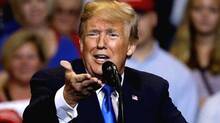
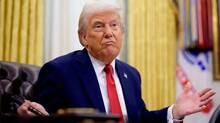
What will happen next in the Iran war is, in the current situation, unpredictable. Many observers believe that the only person who might “win” this war is Netanyahu. Netanyahu has taken his own people into confidence and then gone to war and continues it, whereas for Trump, the situation is the opposite. Trump is now in a position where he is unable either to convince his own people why this war is being fought or to pull out of the war. Another fact is that the Gulf‑Arab countries are the ones experiencing the consequences of the US–Israel attack on Iran. These countries, which have ceded their territories for America’s military and commercial interests, are now falling victim to Iran’s counterattacks.
The destruction caused by the war in these countries is directly affecting India. More than ten million Indians earn their livelihood in the Gulf Arab countries. As mentioned earlier, this war, in which no one has yet won, is likely to pave the way for a new world order and new alliances. With this war dragging on without a solution in sight, there is nothing to do but wait and see how it all ends.
(The author is a former president of FOKANA and the founding president of NAMAM (USA).)








 HOME
HOME LATEST
 NOTIFIED NEWS
 POLL
POLL KERALA
  EDITORIAL
  INDIA
INDIA  WORLD
WORLD  CINEMA
  SPORTS
  LIFESTYLE
  SPECIAL
  SCIENCE & TECHNOLOGY
 |
|