

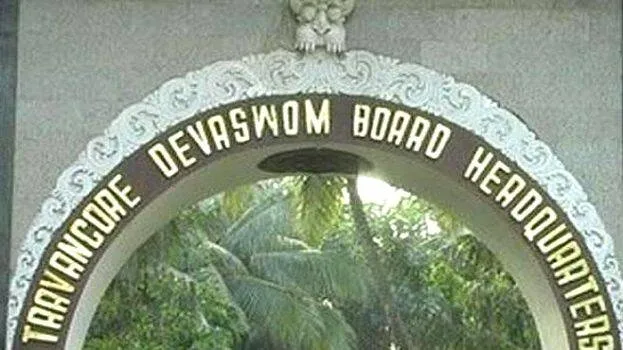
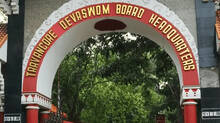
THIRUVANANTHAPURAM: The ambitious computerisation project of the Travancore Devaswom Board (TDB), initiated a decade ago, remains largely on paper. Despite entrusting the task to various agencies over the years, little progress has been made toward the goal of unifying the board's 1240 temples and administrative offices under a single digital network.
The project first took flight in 2016 under the presidency of Prayar Gopalakrishnan. The public sector undertaking Keltron was initially placed in charge, which subsequently subcontracted the work to the Uralungal Labour Contract Cooperative Society. However, the project hit a legal and administrative snag when further subcontracts led to a dispute between the TDB and Keltron, resulting in the abandonment of the contract.
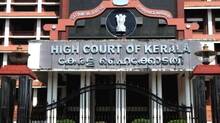
Following the Keltron fallout, the Board explored adopting a unified software system used by temples in Tamil Nadu, in consultation with the National Informatics Centre (NIC). A dedicated consultant was appointed for this transition, but the initiative was thwarted by the High Court, which deemed the proposed software outdated and cancelled the plan.
Most recently, the Board reached an agreement with KITFRA, a government organization. While the High Court approved this contract in 2025, the Memorandum of Understanding (MOU) remains unsigned. The primary point of contention is the ₹100 crore valuation of the MOU.
As the stalemate continues, the Board persists with its traditional manual systems, including paper-based receipts, leaving the vision of a modernised, connected temple network unfulfilled.
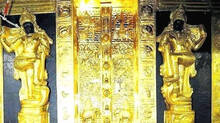
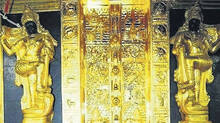
While the board-wide initiative remains in limbo, certain major temples like Sabarimala have implemented their own localised computerisation. However, this progress is limited in scope and functionality, as it primarily tracks revenue while still relying heavily on manual backup. Data is typically entered into the system and then copied into physical registers for permanent storage. Consequently, if the Board requires an audit or account summary, they must still manually inspect these physical temple registers to verify records of assets, income, and liabilities.
This decentralised approach has created significant administrative gaps. Currently, records only capture donations received in cash, while the actual value of donated land, buildings, and equipment remains unassessed and undocumented. Furthermore, temple income is only officially identified once bank or financial institution receipts are processed, leaving the Board with no real-time oversight of its finances.
The lack of a unified system also leaves the Board in the dark regarding its broader obligations and assets. There is no centralised data regarding outstanding amounts due to contractors, nor is there a clear record of completed or ongoing construction projects. Monitoring recurring revenue, such as rent, auction proceeds, and lease money, remains nearly impossible to do accurately. Ultimately, critical information remains scattered across a disconnected maze of various registers and files.



 HOME
HOME LATEST
 NOTIFIED NEWS
 POLL
POLL KERALA
  EDITORIAL
  INDIA
INDIA  WORLD
WORLD  CINEMA
  SPORTS
  LIFESTYLE
  SPECIAL
  SCIENCE & TECHNOLOGY
 |
|