


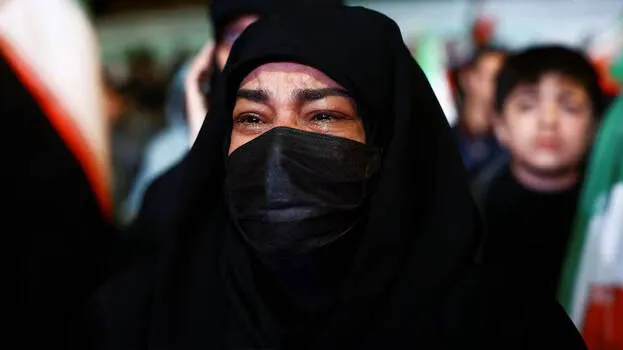
The world views the fifteen-day suspension of the Iran-US war as a significant relief, though it remains unclear whether this two-week peace will hold. In the months leading up to the conflict initiated by the US and Israel, Iran was fractured by internal protests; however, once the war began, the Iranian people largely united behind their country. Consequently, the primary US objective of regime change failed to materialise, even after 45 days of intense fighting. Although Israel assassinated Iran’s Supreme Leader, Ayatollah Khamenei, in the opening days of the war, the core structure of the Iranian leadership has remained resilient. Beyond overthrowing the government, the US also sought to secure control over Iran’s vast energy resources.
Despite the targeted bombing of Iran's oil fields and refineries, control of these assets remains firmly in Iranian hands. At the onset of the conflict, few believed Iran could withstand the world’s preeminent military and economic power for over six weeks; yet, that is exactly what has transpired. By this stage, a temporary ceasefire became a strategic necessity for both Washington and Tehran. While Pakistan officially mediated the peace talks, unofficial reports suggest that China's forceful intervention was the true catalyst for the truce. As a primary importer of Iranian crude oil at discounted rates, China recognised that a prolonged war would pose a direct threat to its long-term energy security.
The maritime dimension has proven equally critical. At the outset, the Strait of Hormuz was not the primary focal point, but as the war reached the 45-day mark, the United States made the reopening of the waterway a non-negotiable condition for a ceasefire. Geography often dictates a nation's invincibility, and in this regard, the Strait has emerged as Iran's ultimate strategic leverage. While Iran has agreed to reopen the passage in exchange for the truce, the waters remain under the firm control of the Islamic Revolutionary Guard Corps. Reports now suggest that once the conflict concludes, a new precedent may be set: ships transiting the Strait will be required to pay tolls to both Iran and Oman.
The ravages of this war are being felt far beyond the front lines. Across the Gulf and West Asia, extending to nations like India, cooking gas shortages and soaring petrol prices are taking a heavy toll on everyday life. Increasingly, analysts view this as a conflict driven more by economic imperatives than political ideology. Although hostilities in Iran have been paused, the conflict in Lebanon persists as Israeli strikes continue unabated. Nevertheless, this two-week ceasefire offers the world a vital reprieve. Peace-loving people everywhere now hope—and pray—that this silence of the guns will endure and that not another shot will be fired.








 HOME
HOME LATEST
 NOTIFIED NEWS
 POLL
POLL KERALA
  EDITORIAL
  INDIA
INDIA  WORLD
WORLD  CINEMA
  SPORTS
  LIFESTYLE
  SPECIAL
  SCIENCE & TECHNOLOGY
 |
|