


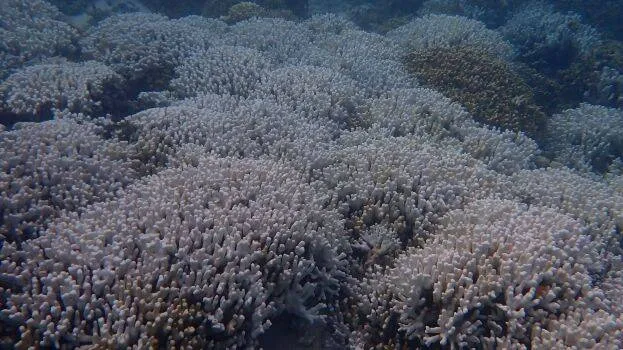
KOCHI: The vibrant underwater cathedrals of Lakshadweep are facing a silent crisis. As rising ocean temperatures grip the region, scientists fear a repeat of the devastating coral bleaching events seen during the El Niño peak of 2023–2024.
To assess the health of these fragile ecosystems, a specialised four-member team from the Central Marine Fisheries Research Institute (CMFRI)—comprising Dr. Mariam Paul Sreeram, Dr. Divya Viswambharan, Alvin Anto, and Aju K. Raju—is set to arrive in the archipelago on May 4th.
Fever in water
In 2024, sea surface temperatures soared to 32.2°C, leading to the destruction of nearly 60% of the coral cover in certain areas. For these organisms to thrive, they require a stable environment with temperatures ideally remaining below 29°C. This year’s mission is twofold: to monitor current bleaching threats and to document how much of the reef managed to recover during the milder temperatures of the previous year.
Nature’s living art: Role of algae
The breathtaking hues of a coral reef aren't actually from the coral itself, but from a microscopic partner called Zooxanthellae.
Why reefs matter to us
Lakshadweep is home to over 78 species of coral, forming a vital part of India’s marine heritage alongside the Andaman Islands, the Gulf of Kutch, and the Gulf of Mannar. Their disappearance would be felt far beyond the shoreline:
"The destruction of coral reefs—the primary sanctuary for countless fish and microorganisms—will have far-reaching ecological consequences." — Dr. Ratheesh Kumar Raveendran, Senior Scientist, CMFRI.





 HOME
HOME LATEST
 NOTIFIED NEWS
 POLL
POLL KERALA
  EDITORIAL
  INDIA
INDIA  WORLD
WORLD  CINEMA
  SPORTS
  LIFESTYLE
  SPECIAL
  SCIENCE & TECHNOLOGY
 |
| 


