


The prevailing social practice is to praise the judiciary when the verdict comes on expected lines and criticise it when it is the opposite. If it does not cross the line, such debates will help further strengthen our democracy. It is very comforting that the two verdicts from the Supreme Court on Tuesday did not dampen the general expectations of the people. The Supreme Court intervened by correcting the verdicts of the lower courts in the Aravalli and Unnao cases. The Unnao case, in which a 15-year-old girl was abducted and raped in Uttar Pradesh in 2017, was discussed widely across the country and even gave birth to countless protests for justice.
The case gained national attention when political leader and former BJP MLA Kuldeep Singh Sengar was named an accused. Sengar is serving a 10-year prison sentence for raping the girl and murdering her father. Earlier, the trial of the case was transferred from Lucknow to Delhi on the orders of the Supreme Court. The vehicle in which the Unnao girl and her relatives were travelling to Delhi to reach the court was rammed by an unregistered lorry. The girl was seriously injured, while two of her female relatives died.
Despite allegations of Sengar’s role behind these deaths, the court acquitted him in the road accident case. The Supreme Court questioned the Delhi High Court's decision to grant bail by suspending the sentence given to Sengar in the rape case. The Supreme Court, which stayed the Delhi High Court's decision, also ordered a notice to be sent to the convict. The Supreme Court pointed out that the Delhi High Court, which granted bail based on the finding that the MLA does not fall within the definition of a public servant under the POCSO Act, did not consider the fact that the accused was serving a prison sentence in the case of killing the victim’s father.
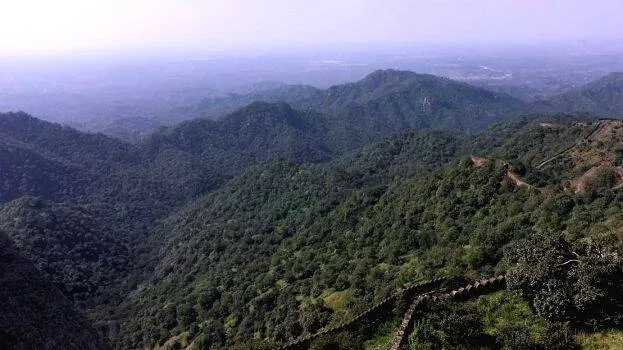
Another important intervention of the Supreme Court was in a suo motu case related to the protection of the Aravalli Range, which plays a major role in the ecological balance of Western India. Earlier, on November 20, a bench headed by the then Chief Justice B.R. Gavai had upheld the definition that the Aravalli Range is considered to be a mountain range only if there are two or more hills of more than 100 meters in a radius of 500 meters. This order, which led to widespread protests, was put on hold by a bench headed by Chief Justice Suryakant the other day. The final verdict in both these cases is yet to come. It is unlikely that the verdict will meet people’s expectations. However, the timely intervention of the Supreme Court is to be applauded.











 HOME
HOME LATEST
 NOTIFIED NEWS
 POLL
POLL KERALA
  EDITORIAL
  INDIA
INDIA  WORLD
WORLD  CINEMA
  SPORTS
  LIFESTYLE
  SPECIAL
  SCIENCE & TECHNOLOGY
 |
|