


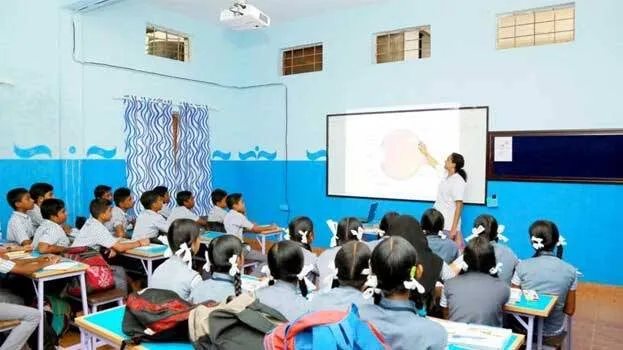
Kerala has long been India’s most intriguing outlier: a state that achieved near-universal literacy and enviable social outcomes without first becoming a manufacturing powerhouse. For decades, that “Kerala Model” was held up as proof that human development could lead growth rather than merely follow it.
But in the 2020s, the story has acquired a sharper edge. India’s economic architecture has been rewired-digital public infrastructure, formalization, a national market, and a capex-heavy push to build roads, ports, logistics, and industrial corridors. Kerala, by contrast, is increasingly defined by what it has not yet done: build a large, resilient base of locally produced tradables-goods and services that scale beyond its borders and create mass, high-quality jobs at home.
The risk is not that Kerala is “poor.” It isn’t. The risk is that Kerala is becoming a high-aspiration society with a constrained production system: strong education, strong consumption, and weak local absorption of talent-financed by remittances and compressed by a fiscal structure that leaves little room for transformative investment.
What follows is a data-anchored account of how this drift happens: through a tightening fiscal cage, rising implementation risk for investors, and a political economy that too often treats transparency and competitiveness as optional.
1) A paradox, but no longer a mystery
Kerala’s strengths are real and measurable: literacy near 94%, high life expectancy, and an administrative culture that historically delivered public services better than most. Yet the state’s real GSDP growth for FY2024–25 is reported at 6.19%, the slowest among southern peers in that comparison year. That number is not, by itself, an indictment-6% growth is not stagnation. But it becomes revealing when paired with Kerala’s fiscal position and labour market outcomes. The state is not failing to grow; it is failing to grow in a way that creates enough productive jobs locally for its educated youth.
The central question is conversion: How does a state convert education into enterprise, and enterprise into wages? Kerala’s present answer relies heavily on an external labour market-migration-and on a state budget that is increasingly consumed by committed obligations.
2) The fiscal trap: borrowing to run, not to build
Kerala’s most binding constraint today is fiscal. And within fiscal health, there is one number that matters more than headline debt: the revenue deficit-borrowing used for day-to-day consumption rather than capital formation.
In 2023–24, Kerala’s revenue deficit is reported at Rs 18,140 crore. When a state runs persistent revenue deficits, it is not merely “spending more.” It is shifting the cost of current administration to future taxpayers without building commensurate productive assets.
Audit findings underline the compression of capital expenditure. In 2023–24, of approximately Rs 1.595 lakh crore in total expenditure, only Rs 13,584 crore (8.52%) went to the capital account. Even more starkly, audit observations note that only a small fraction of borrowings effectively supports capital creation, with most borrowing absorbed by salaries, pensions, interest, and routine administration.
This is how a state becomes fiscally busy yet development-poor: a large budget, a large workforce, and too little investible headroom.
3) Committed expenditure: the budget becomes pre-spent
Kerala’s budget is increasingly governed by what economists call “committed expenditure”-salaries, pensions, and interest. These are not optional line items; they are contractual and political commitments. As they rise, discretion vanishes.
For 2025–26, Kerala is estimated to spend Rs1,05,398 crore on committed expenditure, roughly 69% of revenue receipts. The approximate composition-salaries (~29%), interest (~21%), pensions (~19%)-means that before Kerala funds new infrastructure, industrial facilitation, or modern skilling systems, the majority of revenue has already been spoken for.
The economic consequence is predictable: capital outlay gets squeezed, maintenance gets deferred, and industrial investments that require complementary public infrastructure become harder to support. In such a structure, even a pro-growth government will find itself reduced to cash-flow management.
4) Off-budget liabilities: when transparency becomes a policy variable
Kerala’s fiscal debate cannot be understood without its off-budget financing ecosystem-particularly borrowings routed through entities such as KIIFB and other special purpose vehicles. These structures are often defended as “innovative financing.” In practice, their macro effect depends on transparency, legislative control, and the durability of repayment streams.
Audit discussions have raised concerns that off-budget borrowings can mask the true scale of liabilities and shift fiscal stress into future years when repayments mature. As of 31 March 2022, Kerala’s total liabilities including off-budget components were reported at Rs 3,83,267 crore.
Kerala’s political response to these concerns has also become part of the story. In 2021, the Kerala Assembly passed a resolution disputing aspects of the audit critique of KIIFB-an unusual escalation against a constitutional accountability institution. Governments can disagree with audit methodology; markets, however, respond to whether disputes translate into transparent remediation or institutional friction.
A careful constitutional point matters here: the concern is less a single clause and more the broader architecture. Borrowing constraints operate through the Article 293 consent/conditions framework, FRBM-linked ceilings, and the Consolidated Fund principle. National-level expert work commissioned for finance-commission discussions has cautioned that certain practices-especially those that effectively earmark public revenues outside standard budgetary channels-can raise concerns under Article 266 (the Consolidated Fund principle). This is not a rhetorical argument; it is a governance risk premium that investors and rating frameworks internalize.
5) Governance and perception: when institutions look negotiable
Economic competitiveness is not only about incentives and infrastructure; it is also about institutional predictability.
Kerala’s political discourse has periodically been dominated by allegations of patronage in public appointments. A frequently cited data point is that 557 people were appointed as personal staff to the Chief Minister and ministers over a five-year period, a practice criticized by opposition leaders for potential long-term fiscal liabilities (including pension-linked benefits). Allegations of nepotism and preferential appointment should be treated as political claims unless adjudicated; what matters economically is that repeated cycles of such controversy erode trust in meritocratic recruitment systems and amplify the sense that public resources can be captured through proximity.
Perception becomes policy-relevant because it affects investor calculus. A state does not need perfect governance to attract investment; it needs predictable rules, enforceable contracts, and a culture that treats oversight as corrective rather than adversarial.
6) Industry and jobs: the missing absorption engine
Kerala’s labour market is where the paradox sharpens. The state has a large pool of educated young people, yet too few scalable private-sector clusters to absorb them.
Reported estimates place Kerala’s youth unemployment (15–29) at ~29.9%, with female youth unemployment ~47.1%. Educated male youth unemployment has been reported around 31.28%. Kerala’s worker population ratio (WPR) is around 50.5%, indicating that a substantial share of working-age people are not engaged in work at a given point.
These are not merely “labour statistics.” They describe a social economy where education does not reliably lead to local opportunity-and where the most rational strategy for talent is to leave.
The drivers are structural:
Skills mismatch: credentials rise faster than market-aligned technical depth.
Public-sector preference: government employment remains culturally attractive because private jobs often do not match wage expectations or security.
Weak tradable clusters: Kerala has services strengths, but fewer large manufacturing ecosystems that create mass employment.
Implementation risk: investors weigh not just policy promises but the probability of disruption, delay, and local political friction.
The most widely referenced investment “signal event” in recent years is the Kitex episode-where the company publicly attributed its decision to shift a large proposed investment elsewhere to administrative harassment and lack of support. Whatever the full merits, the reputational impact is durable: businesses remember uncertainty more than incentives.
7) The remittance engine: prosperity with a hidden vulnerability
Kerala’s household economy has a pillar that many Indian states envy: remittances.
Reported estimates indicate remittances rose from Rs 85,092 crore (2018) to Rs 2,16,893 crore (2023)-a dramatic increase. In that dataset, remittances are estimated at ~23.2% of NSDP and roughly 1.7 times the state’s total revenue receipts. This is economic oxygen: it supports consumption, education spending, housing, and social mobility.
But remittances can also postpone necessary reforms. A state that can “import prosperity” may under-invest in the difficult work of building domestic tradables. And because remittances are externally generated, they are exposed to geopolitical shocks, labour market tightening abroad, currency cycles, and migration policy changes.
It is also analytically important to note that part of the rupee-value surge can reflect exchange-rate translation effects: when the rupee depreciates, the INR value of dollar-denominated remittances rises even if migrant headcounts do not. The headline number can therefore mask shifts in distribution-fewer households receiving larger transfers, or concentration within certain corridors.
8) Import dependence: a consumption economy that buys what it doesn’t make
Kerala’s economic structure is consumption-heavy and import-reliant. Official industrial-policy documents have estimated annual imports of roughly ₹1.28 lakh crore, with a very large share sourced from other Indian states.
Import dependence is not inherently bad. Kerala benefits from India’s national market. The problem is strategic: when a state consumes far more than it produces in tradables, it becomes structurally dependent on external income streams-remittances, transfers, borrowing-and more vulnerable to supply shocks.
9) Inflation: when high living costs become an inequality tax
Kerala’s cost-of-living pressures have been pronounced in recent periods. For December 2025, all-India CPI inflation was 1.33%, while Kerala’s state inflation has been reported around 9.49% in institutional/state-level analyses.
High inflation in a consumption-heavy, import-dependent economy functions as a regressive tax. It hits the poor harder, undermines welfare gains, and forces the state into higher nominal spending merely to preserve real benefits-further tightening the fiscal trap.
10) The revenue base problem: lotteries and liquor fill the gap
A resilient state finances development through a broad tax base generated by productive activity-formal jobs, corporate profits, and expanding value chains. Kerala’s revenue profile shows a heavier reliance on consumption-linked sources, including lotteries and liquor excise. Credible reporting based on state data has suggested these together account for roughly one-fourth of revenue in some recent fiscal years.
This is not a moral argument. It is a macro argument: sin revenues are pro-cyclical, politically sensitive, and do not reflect productivity growth. A state leaning on them signals that its production-linked tax base is insufficient.
The central failure: conversion, not capability
Kerala’s problem is not capability. It has administrative experience, globalized households, and high human capital. Its problem is conversion.
A state cannot indefinitely remain a place that educates for other economies while borrowing to sustain the present. The self-reinforcing loop is now visible:
Kerala’s next decade will be decided by whether it can execute three transitions at once:
Kerala can still be India’s model-but it must become a model of the next phase: not only human development, but human development converted into local productive prosperity.
CA. M R Ranjit Karthikeyan BCom., LLM., DISA (ICAI), FCA
Founding Partner, Ranjit Karthikeyan Associates LLP
Thiruvananthapuram | Kochi | Kozhikode | Bengaluru
www.rkaglobal.com | +91 989 599 7000 | 949 727 0000












 HOME
HOME LATEST
 NOTIFIED NEWS
 POLL
POLL KERALA
  EDITORIAL
  INDIA
INDIA  WORLD
WORLD  CINEMA
  SPORTS
  LIFESTYLE
  SPECIAL
  SCIENCE & TECHNOLOGY
 |
|