


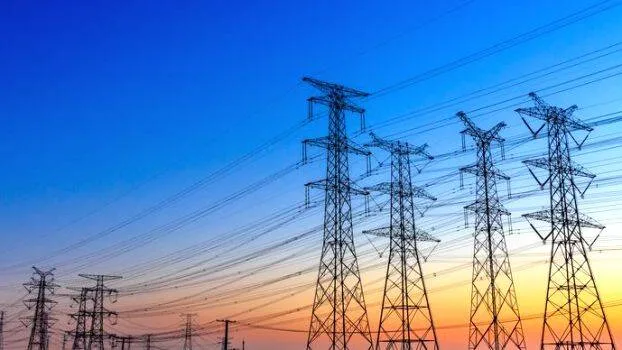
The ongoing conflict in West Asia constantly reminds us how small and interconnected our lives are, even if we are far from the actual events. Although countries like the United States, Israel, and Iran are directly involved, we have no direct role in it. Yet, its impact is clearly felt in our daily lives. Shortages of cooking gas can disrupt household routines, forcing people to shift to electric stoves. This leads to a sharp rise in the state’s daily electricity consumption. If electricity has to be purchased from outside at higher rates, the burden eventually reflects in our electricity bills as a surcharge. All of this shows how global developments can directly affect the everyday life of ordinary people, even in places far removed from the conflict.
Restaurants are shutting down, airfares are rising, gold prices are soaring, and concerns are growing over possible increases in petrol and diesel prices. Like an inescapable cycle, war is casting its unseen shadow even over distant regions, creating a sense of anxiety and uncertainty. The impact of the West Asian conflict is already being felt through restrictions in LPG supply and a sharp rise in electricity consumption. Due to fears of gas shortages, many people have started widely using induction cookers for cooking. At the same time, the intense summer heat has led to increased use of air conditioners. Together, these factors have pushed the state’s electricity consumption to an all-time high.
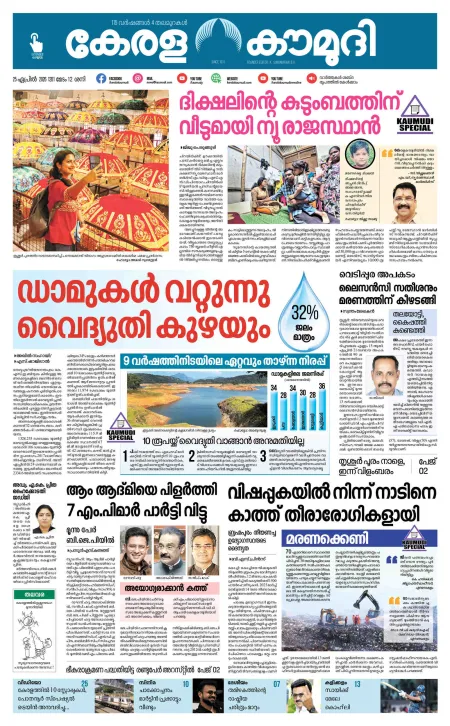
The main story published by Kerala Kaumudi on its front page yesterday highlighted that peak power consumption between 6 pm and 10 pm last Tuesday reached 5,621 megawatts. The same report also stated that the previous all-time record for peak consumption was 5,797 megawatts in May 2024. However, by Wednesday, consumption had already crossed that level, reaching a new all-time high of 5,802 megawatts. This is happening even before the peak summer months of April and May, highlighting the unusually high demand at the end of March itself. Although electricity consumption has been increasing every year, there has been a noticeable delay in developing alternative energy sources. The main reason behind this, it is argued, is that the electricity board finds it easier to purchase power from outside at higher rates and pass the additional cost on to consumers through surcharges.
Even when Cochin International Airport operates entirely on solar energy and is the world’s largest fully solar-powered international airport, questions remain as to why the Kerala State Electricity Board is reluctant to actively promote rooftop solar projects. The floating solar plant at the Banasura Sagar Reservoir in Wayanad is successfully generating about 500 kilowatts of electricity daily. However, plans announced years ago to set up similar floating solar plants in other reservoirs across the state have not progressed. There are also several small hydropower projects that are nearly complete but have been abandoned midway. If such small-scale hydropower and solar projects are completed on a priority basis, the state can reduce its dependence on costly external electricity and avoid passing on the financial burden to consumers.












 HOME
HOME LATEST
 NOTIFIED NEWS
 POLL
POLL KERALA
  EDITORIAL
  INDIA
INDIA  WORLD
WORLD  CINEMA
  SPORTS
  LIFESTYLE
  SPECIAL
  SCIENCE & TECHNOLOGY
 |
|