


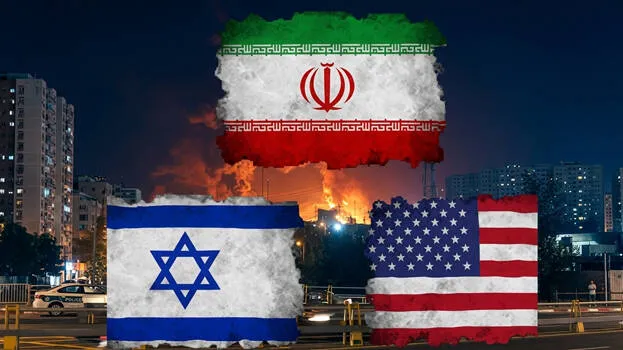
While the collective hope of the global community remains fixed on a swift conclusion to the Middle East conflict, current trajectories suggest the opposite. The war is not merely persisting; it is accelerating toward a dangerous zenith. A critical Israeli oil refinery was recently decimated by a missile strike attributed to Hezbollah, marking a significant breach in industrial security. In response, US President Trump has issued a severe ultimatum, threatening the destruction of Iranian power grids, desalination plants, oil fields, and the strategic Kharg Island if the Strait of Hormuz is not reopened immediately. Tehran has met this rhetoric with its own provocations, chillingly suggesting that American servicemen would become prey to sharks in the Persian Gulf.
The logistical shift toward a ground engagement is becoming increasingly apparent. Reports indicate that thousands of US Marines are stationed along the coast, prepared to seize Iran’s nuclear stockpiles by force. This buildup represents a formidable barrier to any immediate ceasefire. President Trump’s public stance remains volatile, oscillating between assertions that the war is nearing its end and declarations that military pressure will intensify. This inconsistency has led Iranian Parliament Speaker Mohammad Baqir to denounce American diplomacy as a facade, claiming that Washington is secretly orchestrating a large-scale land invasion.
The gravity of the situation was underscored by Prime Minister Narendra Modi during his recent 'Mann Ki Baat' address. By preparing the Indian public for a potential fuel crisis, the Prime Minister signaled a conviction that this conflict will be prolonged. While Iran’s assurance that it will not obstruct fuel shipments to select nations, including India, provides a temporary reprieve, the stability of such a promise is tethered to the absence of a full-scale land war. Should the conflict move inland, the current maritime status quo is unlikely to hold.
The shift in Iranian strategy to include major industrial centers has sent shockwaves through the Gulf Cooperation Council states. A recent drone and missile strike on the Global Aluminium Plant in Abu Dhabi resulted in significant infrastructure damage and injuries to several employees, including five Indian nationals. Similarly, the government-controlled aluminium facility in Ma'mir, Bahrain, came under fire. This pattern of targeting industrial assets poses a direct threat to the millions of expatriate workers, particularly the Malayali community, who form the backbone of the Gulf’s labor force. Many workers remain in the conflict zone, trapped between the immediate physical danger of missile strikes and the long-term economic fear of losing their livelihoods.
In this volatile landscape, India emerges as a pivotal diplomatic actor. Maintaining robust relations with Iran, the United States, and Israel, New Delhi possesses a level of influence that other regional mediators, such as Pakistan, may lack due to a deficit of trust. As the crisis deepens, the international community increasingly looks toward Indian intervention as the most viable path to preventing a total regional collapse.












 HOME
HOME LATEST
 NOTIFIED NEWS
 POLL
POLL KERALA
  EDITORIAL
  INDIA
INDIA  WORLD
WORLD  CINEMA
  SPORTS
  LIFESTYLE
  SPECIAL
  SCIENCE & TECHNOLOGY
 |
|