


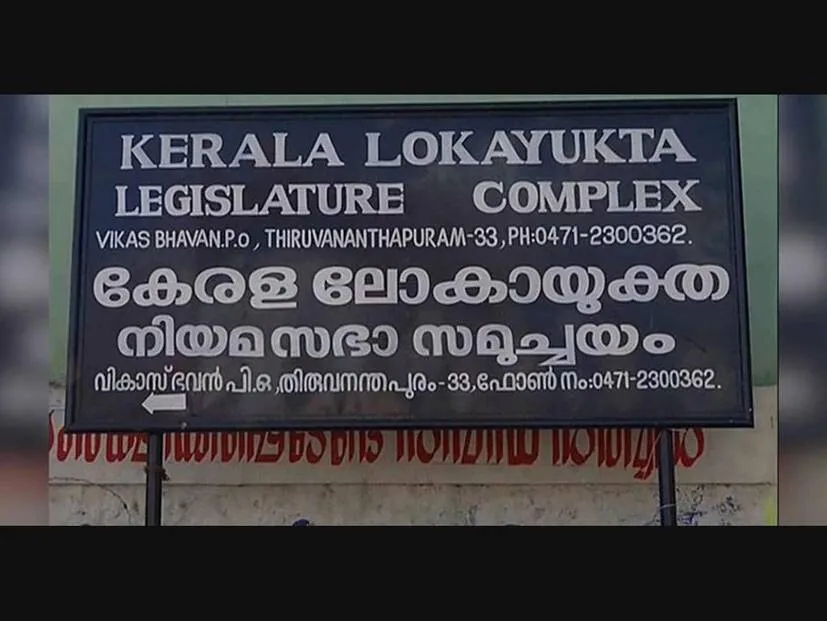
THIRUVANANTHAPURAM: With the High Court upholding the Lokayukta Amendment Act, the government now has the authority to reject Lokayukta orders, including those that recommend the disqualification of public servants. As per the amendment, even if the Lokayukta finds someone guilty of corruption, the Chief Minister, the Legislative Assembly, or the appointing authority can overturn the decision. The Governor’s appellate powers have also been removed.
If a Lokayukta verdict is issued against the Chief Minister, the appellate authority will be the Legislative Assembly instead of the Governor. In cases involving ministers, the Chief Minister will decide, and in cases involving MLAs, the Speaker will act as the appellate authority. Even if there is an adverse order against the Chief Minister, it can be overturned using the majority in the Assembly.
The Lokayukta, which has semi-judicial powers and is headed by a retired High Court judge with two former High Court judges as Upa Lokayuktas, will no longer have binding authority. The Chief Minister, Assembly, or Speaker can review and reject its orders.
Reduced to judicial commission level
With the government gaining the power to reject its orders, the Lokayukta is effectively reduced to the level of a judicial commission. Like a judicial commission, whose recommendations can be accepted or rejected by the government, Lokayukta orders may now only serve as recommendations. This means that action against those found guilty may not be taken, and directions for action can be ignored. Even after conducting investigations, hearings, and evidence collection, Lokayukta decisions may lose significance if rejected by the government. The Lokayukta’s investigation wing, headed by an officer of IG rank, may also become ineffective.









 HOME
HOME LATEST
 NOTIFIED NEWS
 POLL
POLL KERALA
  EDITORIAL
  INDIA
INDIA  WORLD
WORLD  CINEMA
  SPORTS
  LIFESTYLE
  SPECIAL
  SCIENCE & TECHNOLOGY
 |
|