


The Constitution grants certain special rights to socially backward communities with the aim of uplifting them. Therefore, it is not reasonable for a person to convert to another religion and still claim the same benefits that were available to them as a member of a backward community. Similarly, a person who converts to Hinduism from another religion cannot reasonably demand the continuation of the minority rights they enjoyed in their previous religion. Religious conversion should be for faith, not for financial benefits or other advantages. Sacrifice is considered a fundamental principle of all religions. Therefore, conversion, along with retaining both old and new benefits, cannot go hand in hand.
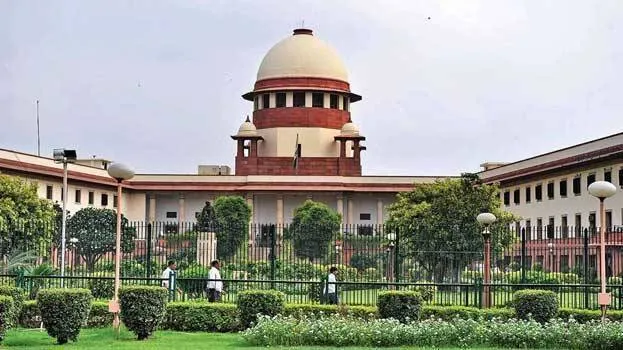
The Supreme Court has expressed a similar view in its ruling that converted Christians cannot be considered as members of the Scheduled Castes. The apex court upheld an order of the Andhra Pradesh High Court, which stated that a person who converts to Christianity cannot be classified as a Scheduled Caste. It also pointed out that the Constitution (Scheduled Castes) Order of 1950 clearly states that a person who converts to any other religion will immediately lose their Scheduled Caste status. It further stated that if a person converts to a religion not mentioned in Clause 3 of the Constitutional Order, they cannot be considered a member of the Scheduled Castes. Such individuals will not be eligible for any legal benefits, protections, or reservations meant for the Scheduled Castes. The bench, headed by Justice Prashant Kumar Mishra, made it clear that there will be no relaxation in this matter.
The Supreme Court delivered this judgment while hearing a petition filed by Chindada Anand, who had converted to Christianity and was working as a pastor when he was allegedly attacked. He argued that he should be given protection under the Scheduled Caste and Scheduled Tribe (Prevention of Atrocities) Act. However, the accused opposed this claim. The High Court had earlier observed that caste has no place in Christianity, and therefore, a case under the Scheduled Caste law could not be sustained against those accused of attacking the pastor. The Supreme Court upheld this decision on appeal. The Court also clarified that individuals who were originally Scheduled Castes but later converted can regain their Scheduled Caste status if they reconvert to Hinduism, Sikhism, or Buddhism. This is because these religions are included under Clause 3 of the Constitutional Order. However, three conditions must be satisfied for restoring this status.
First, the individual must have been born into a Scheduled Caste. Second, the reconversion must be genuine. Third, the person must clearly establish that they have voluntarily given up their association and affiliation with the religion they had adopted after conversion.
The Supreme Court ruling also aligns with the reservation system followed in Kerala. In the state, if a Scheduled Caste individual converts to Christianity, they lose their Scheduled Caste reservation benefits. Instead, they are categorised as “converted Christians” and are given one percent reservation. Legal experts say that the existing reservation system followed by the Kerala PSC will not be affected by this Supreme Court judgment.













 HOME
HOME LATEST
 NOTIFIED NEWS
 POLL
POLL KERALA
  EDITORIAL
  INDIA
INDIA  WORLD
WORLD  CINEMA
  SPORTS
  LIFESTYLE
  SPECIAL
  SCIENCE & TECHNOLOGY
 |
|