


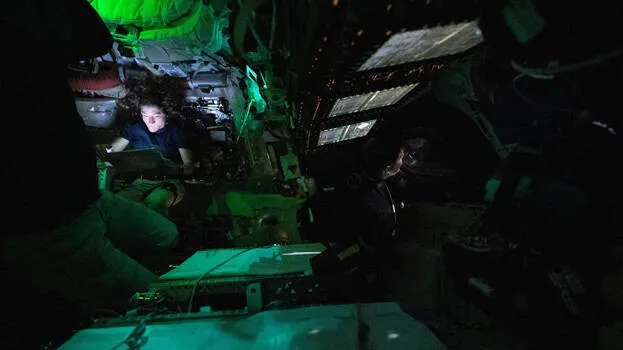
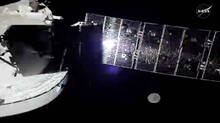
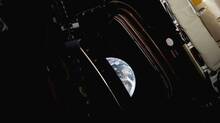
FLORIDA: It has been over 50 years since humans last set foot on the Moon. In a historic milestone for NASA’s Artemis program, the Orion spacecraft—carrying a crew of four—reached a distance of 62,800 kilometres from the lunar surface yesterday. Today, the craft will perform a close approach, coming within 4,000 kilometres before entering a transitional orbit. Tomorrow, the crew is scheduled to begin their return journey to Earth.
Testing limits
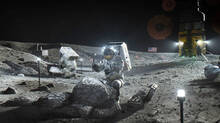
Understanding how the spacecraft performs during its lunar approach is critical for the success of future landing missions. By monitoring Orion's reactions to lunar gravity and deep-space radiation, NASA can ensure the safety of the next mission intended to touch down on the surface.
Journey so far
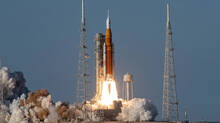
The Artemis II spacecraft, which launched early Wednesday morning, reached the vicinity of the Moon after a journey of four days and six hours. At its furthest point yesterday, Orion was approximately 373,400 kilometers from Earth.
Legacy and future exploration
While the Apollo 17 mission successfully landed humans on the Moon in 1972, NASA has clarified that this specific Orion mission is a flyby and will not attempt a landing. Instead, the crew is focused on gathering vital data and surveying potential sites for a future permanent lunar base. During the approach, the team transmitted a high-resolution image of the Orientale Basin, often referred to as the "Grand Canyon" of the Moon.





 HOME
HOME LATEST
 NOTIFIED NEWS
 POLL
POLL KERALA
  EDITORIAL
  INDIA
INDIA  WORLD
WORLD  CINEMA
  SPORTS
  LIFESTYLE
  SPECIAL
  SCIENCE & TECHNOLOGY
 |
|