


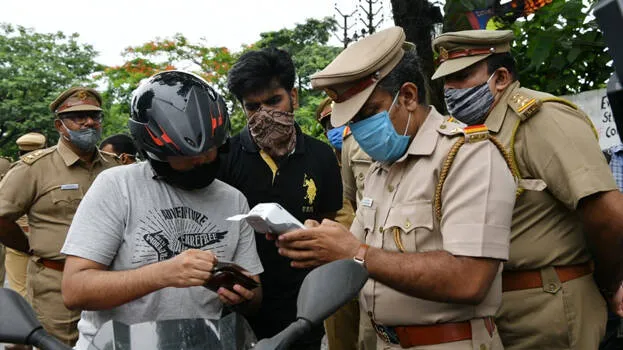
THIRUVANANTHAPURAM: License will be cancelled if a person commits five or more violations in a year. The motor vehicle department can blacklist a vehicle that repeatedly violates the law and take it into custody with the permission of the court. These are the provisions of the new traffic law approved by the Central Motor Vehicle Department. The law with these amendments has come into force.
The RTO has the authority to take action against the offenders. The new rule requires the vehicle owner to be heard before suspending the license.
The amount must be paid within 45 days of receiving the challan. This period will not be extended. The challan can be accepted or questioned. If there is a complaint, an appeal can be filed along with evidence. If the challan is not questioned within 45 days, it will be considered as an admission of guilt. Such persons must pay the amount within the next 30 days after the end of 45 days.
If the complaint is filed, it must be settled within 30 days. The challan will be cancelled if the complaint is found to be correct. If the complaint is rejected, the amount must be paid within 30 days of the order. If the person who filed the complaint wants to approach the court again, they must deposit 50% of the challan amount. If the complaint is rejected and the amount is not paid or the court is not approached within 30 days, the crime will be considered as admitted. The amount must be paid within the next 15 days. The Motor Vehicles Act has been amended to include the suggestions made in the meeting of Transport Commissioners.
Government is responsible for the challan system
Only the state government has the authority to introduce an automatic challan system. Other agencies are not allowed. The government also has the authority to assign officials to issue challans directly.
Deadline for issuing challans:
Directly issued within 15 days
Through electronic system: within 3 days (SMS/email).
If the challan amount is not paid:
All services related to Vahan and Sarathi will be blocked. Only taxes can be paid. Insurance and pollution tests cannot be done. If the court is convinced that the vehicle needs to be seized, that can also be done.




 HOME
HOME LATEST
 NOTIFIED NEWS
 POLL
POLL KERALA
  EDITORIAL
  INDIA
INDIA  WORLD
WORLD  CINEMA
  SPORTS
  LIFESTYLE
  SPECIAL
  SCIENCE & TECHNOLOGY
 |
| 


