


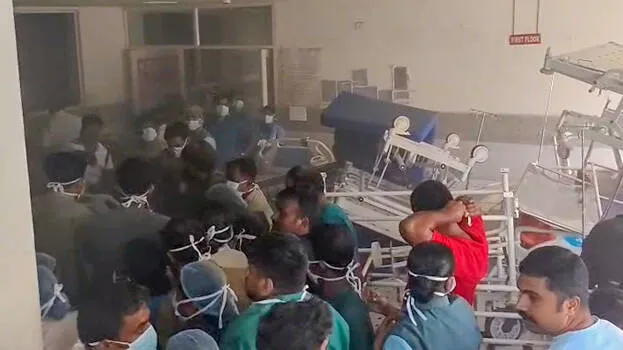
The recent fire in the surgical ICU of the Thiruvananthapuram Medical College Hospital’s multi-specialty block, triggered by a portable ventilator explosion due to overheating, has necessitated a comprehensive safety inspection of all such devices. While efforts are underway to renovate the destroyed surgical ICU and the damaged neuro-ICU, the incident has reignited allegations that fire audits in government medical institutions have become a mere formality. Despite recurrent fires, many hospitals continue to operate within antiquated structures featuring outdated electrical systems, rendering superficial audits ineffective if their primary recommendations remain ignored. The failure to implement necessary safety systems, even after formal notices were issued to the health department, constitutes a grave risk to the thousands of patients who rely on these facilities daily.
Although hospital authorities credit existing safety systems for the rapid containment of the blaze, the lack of a large-scale fire hydrant pipeline in the 1950s-era old block remains a critical vulnerability. The fact that this fire occurred in a facility that had purportedly completed a fire audit only months ago raises serious questions regarding the rigor of such inspections. Furthermore, the delay in equipment maintenance—often caused by the non-payment of funds to medical supply companies—exacerbates the risk of technical failures. The health department's subsequent directive for statewide ventilator inspections follows a similar near-miss on May 2, 2025, when a UPS unit exploded in the MRI department of Kozhikode Medical College.
The occurrence of a fire within an ICU, where post-operative patients are immobilized and unconscious, has caused profound public anxiety. This safety crisis demands that fire audits be extended beyond medical colleges to include all aging government infrastructure. Given that fire incidents in the state historically peak during the months of March, April, and May, there is no margin for administrative laxity. Ensuring that these audits are comprehensive and their findings actionable is no longer a matter of procedure, but a fundamental necessity for public safety.









 HOME
HOME LATEST
 NOTIFIED NEWS
 POLL
POLL KERALA
  EDITORIAL
  INDIA
INDIA  WORLD
WORLD  CINEMA
  SPORTS
  LIFESTYLE
  SPECIAL
  SCIENCE & TECHNOLOGY
 |
|