


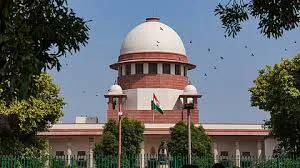
The speeches delivered by two Supreme Court judges at an event organised by the Supreme Court Bar Association in Delhi are likely to be subjected to serious follow-up discussions.
Supreme Court Justice B V Nagarathna pointed out that the government itself is responsible for the large number of pending cases, even while it criticises delays in the judiciary. She noted that the government contributes to the backlog by filing numerous petitions and appeals. Filing appeals in almost every case has become a routine practice for government officials. Cases filed today are added to the list of pending cases from the very next day, she said.
She also observed that political differences and acts of retaliation often drive governments to initiate legal action against individuals holding prominent positions. This tendency does not change even when there is a change in the ruling party. As an example, she referred to the case of Ciza Thomas, who was appointed as Vice-Chancellor of the Technological University by the Governor but was denied her pension benefits by the government. Even after an order from the Administrative Tribunal, the benefits were not granted, and only after strong intervention by the High Court were they released. Elected governments should be the first to put an end to the practice of denying rightful benefits on the basis of political hostility and prolonging cases by filing repeated appeals, thereby wasting time in courts. This is not a feature limited to the LDF government alone; it is a method used by governments across political lines to target those in opposition. In this context, there is no doubt that if Justice Nagarathna’s observations lead governments toward self-criticism and introspection, it will help strengthen democratic values.
At the same event, Supreme Court Justice Ujjal Bhuyan, speaking on the role of the judiciary in Viksit Bharat (Developed India), highlighted concerns about the wrong approach taken by courts in granting bail. He stated that denying bail in minor cases is equivalent to displaying excessive loyalty to authority, and courts should avoid such an approach. He pointed out that even students protesting in violation of restrictions are being denied bail, and FIRs are being registered against individuals for social media posts critical of the government. He further noted that some individuals are forced to remain undertrial prisoners for long periods without getting bail as certain judges display excessive loyalty to authority. Between 2019 and 2023, thousands were arrested under the anti-terror law UAPA, but less than 5 percent were convicted. Moreover, even such cases are reaching the Supreme Court. Justice Ujjal Bhuyan stated that this is a situation that must be avoided.
The differing observations made by the two judges are expected to provide new direction and insight for the Indian judiciary.













 HOME
HOME LATEST
 NOTIFIED NEWS
 POLL
POLL KERALA
  EDITORIAL
  INDIA
INDIA  WORLD
WORLD  CINEMA
  SPORTS
  LIFESTYLE
  SPECIAL
  SCIENCE & TECHNOLOGY
 |
|