


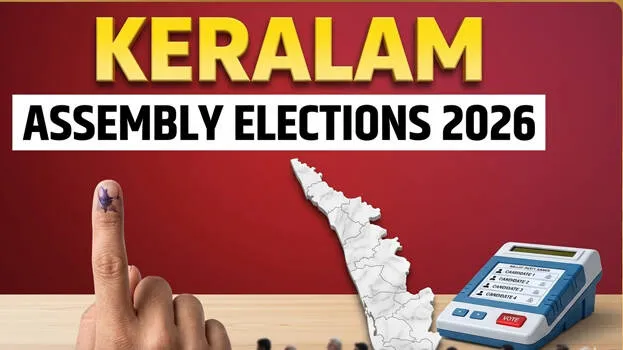
Election season often brings a "heavy rain" of promises. When crafting these pledges, political fronts prioritize making them attractive enough to lure voters. Had every manifesto promise since independence been implemented within the stated timeframe, our country would likely be far more socially and economically advanced than it is today.
Despite this history of unfulfillment, manifestos continue to capture public attention. Unlike the broad developmental goals of the past, modern manifestos now focus on immediate, individual benefits—answering the voter's direct question: "What is in it for me?"
Because these promises are so specific and personal, winning parties face increased pressure to implement them in a timely manner. However, this has raised a significant concern among the public: does our state actually have the financial capacity to fulfil all these promises?
The manifestos of the three major fronts in Kerala reveal a fierce competition to win over the electorate with popular promises. The LDF manifesto highlights the government's achievements over the last decade, with a primary focus on a "60-point action plan" aimed at building a "Nava Kerala" (New Kerala).
In contrast, the UDF manifesto presents a strategy to "save" a state it describes as having fallen into ruin over the past ten years, promising "better days for tomorrow" through its "Indira Guarantees." Meanwhile, the NDA, campaigning on a platform of welfare, development, and infrastructure, has introduced a pledge: promising a CBI investigation into the alleged Sabarimala gold theft case.
The fact that all three fronts have pledged to increase welfare pensions to ₹3,000 underscores how critical these payments are for securing votes and the necessity of ensuring their uninterrupted distribution. One cannot blame the voters of the past for asking, "What do we gain while the state progresses?" Today, people increasingly prioritise the present over the future.
However, it is vital to ensure that regardless of who takes power, these pensions reach only those who truly deserve them. This is especially pertinent given recent investigations that uncovered over 1,400 government officials and several affluent individuals—some even owning luxury cars—on the beneficiary lists. While the fiscal capacity of the state is debated, one thing remains certain: whichever front emerges victorious, the monthly welfare pension is set to rise to ₹3,000.
Another key promise from the LDF is to ensure employment for everyone completing their studies in Kerala, with a guarantee of jobs for 50 percent of women. While admitting that the Silver Line project was stalled due to opposition, the LDF is now introducing a new initiative called High Speed Rail.
The UDF’s primary promise, announced as part of the "Indira Guarantee," is an interest-free loan of ₹5 lakh for young entrepreneurs. Their platform also includes free travel on KSRTC buses for women and health insurance coverage of ₹25 lakh. Meanwhile, the NDA front is promising a Thiruvananthapuram-Kannur high-speed rail line, food and health security cards worth ₹2,500 per month for women in BPL families, and women’s police stations in 78 taluks. Ultimately, the question remains: whose promises will resonate most with the majority? We will have to wait about a month to find out.












 HOME
HOME LATEST
 NOTIFIED NEWS
 POLL
POLL KERALA
  EDITORIAL
  INDIA
INDIA  WORLD
WORLD  CINEMA
  SPORTS
  LIFESTYLE
  SPECIAL
  SCIENCE & TECHNOLOGY
 |
|