


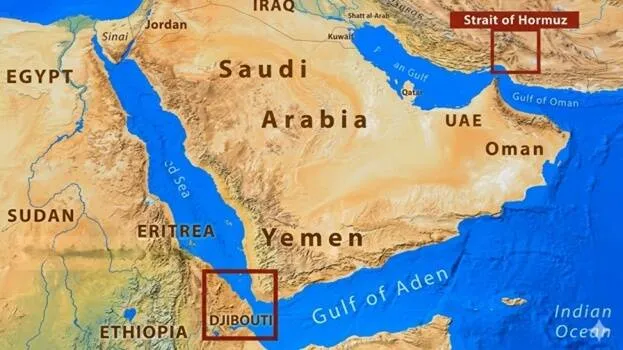
SANA'A: As geopolitical friction intensifies in the Middle East, the Bab al-Mandab Strait—the world’s fourth-largest shipping lane—has become a central flashpoint. Following Iran’s increased pressure on the Strait of Hormuz, Yemen’s Houthi rebels have issued a stark ultimatum: they have threatened to permanently close the Bab al-Mandab should international actors, specifically the United States, disrupt regional peace.
The Houthis have warned that any attempt to seize control of the strait would place international security at immediate risk. This is not a hollow threat; the region has already witnessed airstrikes on commercial vessels, leading several major shipping conglomerates to suspend traffic through these waters entirely.
The Bab al-Mandab is a vital maritime artery that acts as a bridge between East and West. Its geographical and economic significance cannot be overstated:
The ripple effects of a blockade would be felt far beyond the Middle East. If the strait is closed, the trade of oil and gas between Asia and Europe—which relies heavily on the Suez Canal route—would come to a standstill.
India, as a major energy importer and a key player in Asian trade, would be particularly vulnerable. The disruption of supply chains would likely lead to skyrocketing fuel prices and domestic economic instability.
Saudi Arabia has historically attempted to bypass the volatile Strait of Hormuz by transporting oil via pipelines to the Red Sea coast. From there, the oil is exported to Asian markets through the Gulf of Aden.
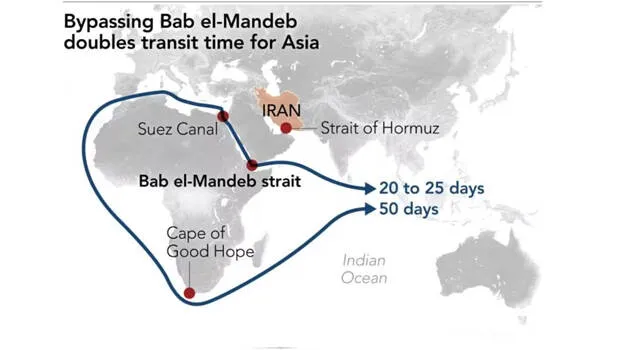
If the Bab al-Mandab is closed, this "escape route" is severed. Saudi tankers would be forced into a logistical nightmare:
This alternative is not only incredibly time-consuming but also prohibitively expensive, threatening to destabilise the global economy and permanently alter maritime trade routes.














 HOME
HOME LATEST
 NOTIFIED NEWS
 POLL
POLL KERALA
  EDITORIAL
  INDIA
INDIA  WORLD
WORLD  CINEMA
  SPORTS
  LIFESTYLE
  SPECIAL
  SCIENCE & TECHNOLOGY
 |
|