


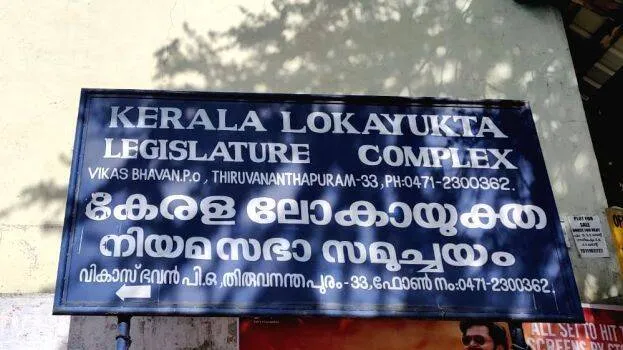
KOCHI: The Kerala High Court has upheld the controversial Lokayukta Amendment Act, but with a significant directive: any report submitted by the Lokayukta regarding corruption cases involving the Chief Minister must be deemed approved if the State Assembly fails to reject it within 90 days.
A Division Bench, comprising Chief Justice Soumen Sen and Justice V.M. Shyamkumar, ordered the State Government to immediately incorporate this "deemed approval" clause into the law. The court noted that without this time-bound requirement, several sections of the Act would be rendered meaningless. Citing various Supreme Court precedents, the Bench affirmed that courts possess the power to "read into" or add words to a statute under special circumstances to preserve its intent.
Shift in Competent Authority
The court validated the shift in power which designates the Legislative Assembly—rather than the Governor—as the competent authority to decide on Lokayukta verdicts against the Chief Minister. Similarly, the Chief Minister remains the authority for cabinet ministers, the Speaker for MLAs, and the State Government for high-ranking officials. The court clarified that the Assembly’s legislative competence to amend this law remains beyond question.
Background of the Case
The verdict follows a series of petitions, most notably by former Leader of the Opposition Ramesh Chennithala, who argued that the 2022 amendments weakened the anti-corruption body and effectively abetted corruption. While the LDF government passed the amendment in 2022, it only received Presidential assent in 2024.
Governor’s Role and Reporting
The Bench clarified that certain powers of the Governor remain intact. If the Assembly approves a report against the Chief Minister but fails to take action, the Governor retains the authority to table the report again alongside an explanatory note. Furthermore, the final decision on any Lokayukta report must be formally communicated back to the Lokayukta. If the Lokayukta disagrees with the decision taken by the authority, it may report that disagreement directly to the Governor.
Judicial Qualifications
Finally, the court addressed the criteria for the Lokayukta Chairperson. The Bench observed that it would be "appropriate" to restore the provision requiring the Chairperson to be a former Chief Justice of a High Court or a retired Supreme Court Judge. The court remarked that there is "no logic" in the current amendment that allows any retired judge to be considered for the role, though it left the final decision on this matter to the wisdom of the Assembly.





 HOME
HOME LATEST
 NOTIFIED NEWS
 POLL
POLL KERALA
  EDITORIAL
  INDIA
INDIA  WORLD
WORLD  CINEMA
  SPORTS
  LIFESTYLE
  SPECIAL
  SCIENCE & TECHNOLOGY
 |
|