


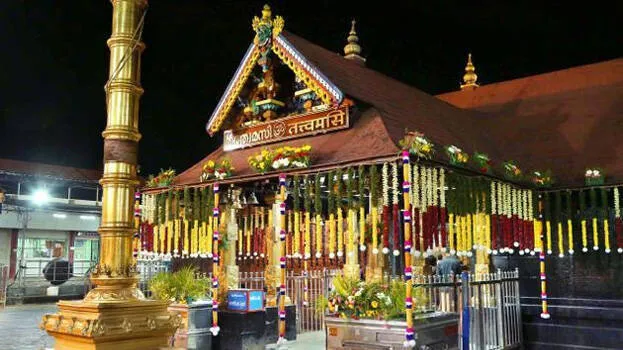
KOCHI: A report submitted by the Devaswom Vigilance to the Kerala High Court has uncovered substantial financial irregularities involving temple priests and Devaswom staff during the recent Sabarimala Mandala season. Investigators found that significant sums of money were processed through personal bank and post office accounts by individuals stationed at the Sannidhanam.
According to the report, the Malikappuram Melshanti (Chief Priest) deposited ₹46.51 lakh into the State Bank of India (SBI) Sannidhanam branch between November 17 and December 31, 2025. His assistant also recorded transactions totaling ₹1.17 lakh. When questioned, the individuals claimed these funds were received as dakshina (devotional offerings).
The investigation revealed a broader pattern of financial activity. During the same period, temple staff, assistant priests, and local vendors conducted 1,667 transactions totaling ₹8.08 crore at the same SBI branch. Additionally, Dhanlaxmi Bank recorded 941 transactions amounting to ₹11.45 crore, linked to 18 accounts held by various personnel, including daily wage workers and contractors. The court noted that several individuals involved are already under investigation for prior irregularities regarding the sale of Aadi-shishtam (leftover) ghee.
Further scrutiny of postal records identified money orders totalling ₹14.08 lakh sent by 16 individuals, including sanitation staff and shop owners. In response to these findings, a Devaswom bench comprising Justice V. Raja Vijayaraghavan and Justice K.V. Jayakumar has directed the State Government and the Travancore Devaswom Board to submit an affidavit this Thursday. The court has requested a comprehensive plan to prevent further misappropriation of temple revenue.
Systemic Loopholes and Malpractices
The Vigilance report highlights several critical loopholes that have facilitated these malpractices. It notes that some staff members routinely collect currency notes and coins offered by pilgrims along with pooja materials, often evading security surveillance. Reports also indicate that certain employees solicit favors from devotees in exchange for assisting with Neyyabhishekam (ghee offerings) and other rituals. Furthermore, investigators observed that some personnel have been pocketing cash that falls to the floor during the counting of the Hundi (offering box).
The report also criticised the hiring practices for daily wage workers, who are paid ₹650 per day. The high volume of temporary staff creates opportunities for exploitation, with some workers even reportedly selling lottery tickets while on duty. To address these issues, the Devaswom Vigilance has recommended restricting the number of daily wage workers to match specific duty requirements. They have also suggested the mandatory deployment of police at all cash-handling points, including during monthly poojas, to ensure stricter financial oversight.





 HOME
HOME LATEST
 NOTIFIED NEWS
 POLL
POLL KERALA
  EDITORIAL
  INDIA
INDIA  WORLD
WORLD  CINEMA
  SPORTS
  LIFESTYLE
  SPECIAL
  SCIENCE & TECHNOLOGY
 |
|