

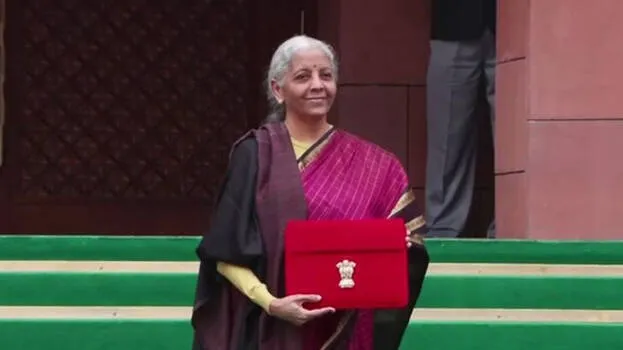
The Union Budget 2026-27 is framed around three kartavya - growth, aspirations, and inclusive development. For Kerala, a coastal, service‑driven, remittance‑rich state with deep social capital but constrained fiscal space, the question is simple: does this Budget merely mention Kerala, or does it meaningfully create new levers for the state’s next growth wave?
The answer lies not only in the few explicit references to Kerala, but in how intelligently the state government, local bodies, and industry decode and leverage the wider policy architecture.
Rare Earth Corridors: A Strategic Opening, Not a Done Deal
One of the most important direct references to Kerala is the proposal to support mineral‑rich states - including Kerala - to establish dedicated Rare Earth Corridors for mining, processing, research and manufacturing of permanent magnets. This is not just a mining policy; it is an industrial and geopolitical opportunity.
Rare earths sit at the heart of electric vehicles, wind turbines, advanced electronics and defence systems. If Kerala can move beyond being a mere supplier of raw minerals to becoming a node in the value chain - separation, processing, magnet manufacturing, component fabrication - it can transform parts of coastal and southern Kerala into a specialised tech‑materials cluster.
Three policy questions emerge for Thiruvananthapuram and Kochi:
Handled well, the Rare Earth Corridor could become for Kerala what electronics became for Noida and automotive for Chennai - a long‑term anchor sector.
Coastal Kerala: From “God’s Own Country” to Blue Economy Hub
The Budget reinforces an emerging national consensus: India’s growth story in the next decade will be coastal as much as continental. For Kerala, this is both an opportunity and a test of strategic clarity.
Several provisions align neatly with Kerala’s strengths:
Yet, central policy can only create incentives and remove frictions. Whether this becomes a “Blue Economy Revolution” for Kerala depends on:
If Kerala treats the Budget’s coastal measures as a strategic package, it can pivot from being only a tourism‑oriented coast to a diversified blue‑economy hub spanning seafood, logistics, ship‑related services and marine technology.
The Plantation Corridor: Coconut, Cashew, Cocoa and Sandalwood
Few states are as closely identified with high‑value plantation crops as Kerala. The Budget’s emphasis on coastal high‑value agriculture - especially coconut, cashew, cocoa and sandalwood - speaks directly to Kerala’s rural base.
Key national moves - a Coconut Promotion Scheme to replace ageing trees and raise productivity; a dedicated programme to make Indian cashew and cocoa premium global brands; and a planned revival of the sandalwood ecosystem - collectively align with Kerala’s agrarian structure. But the state’s challenge is different from that of newer coastal regions: Kerala has high human development, high land prices, and fragmented holdings. That calls for a different execution model:
If the state government can align its own schemes with the Centre’s plantation thrust, Kerala’s “old economy” of coconuts and cashews can be repositioned as a high‑margin, branded, export‑driven “green sunrise” sector.
Tourism, Ayurveda and Medical Value Hubs: Kerala’s Natural Advantage
The Budget’s tourism and health‑tourism initiatives are almost tailor‑made for Kerala’s brand profile.
On the tourism front, the proposed Turtle Trails along key nesting sites on the shores of Odisha, Karnataka and Kerala give the state a concrete eco‑tourism narrative that goes beyond backwaters and hill stations. Additionally, the creation of a National Destination Digital Knowledge Grid for cultural, spiritual and heritage sites can enable Kerala to digitally curate its temples, churches, mosques, synagogues, festivals and performing arts in a structured, searchable manner.
On the health side, the plan to support states in establishing Regional Medical Hubs for medical value tourism, combined with a strong push for Ayurveda and AYUSH institutions, offers a powerful synergy for Kerala:
A forward‑looking state strategy could pitch Kerala as India’s “Integrated Healing State” - where modern medicine, traditional systems and eco‑tourism converge.
NRIs, Tax Changes and the Kerala Middle Class
Kerala’s social fabric is deeply shaped by migration: to the Gulf, to Europe, to the rest of India. The Budget’s direct‑tax tweaks hold special significance here.
The sharp reduction of TCS on overseas tour packages to a flat, low rate, and the lowering of TCS on outward remittances for education and medical treatment, ease liquidity pain for families funding international travel, studies and care. Combined with a one‑time disclosure window for small foreign assets and incomes, this signals a more pragmatic approach to cross‑border financial compliance - relevant for students, young professionals and returning NRIs from Kerala who may have inadvertently fallen foul of complex disclosure rules.
However, the state must read the writing on the wall. The Centre’s shift to a simpler, exemption‑light tax regime, rationalisation of penalties and prosecution, and the new Income Tax Act effective from April 2026 together point to a long‑run environment where tax administration is more automated, more data‑driven and less discretionary. Kerala’s professionals - chartered accountants, lawyers, consultants - will need to reposition away from “procedure navigation” towards high‑quality advisory, especially for internationally mobile households.
For the Kerala middle class, the Budget is not a windfall, but it does reduce friction and uncertainty in how they interact with the tax system, particularly in cross‑border contexts.
Cities, Services and the Kerala Development Puzzle
The Budget speaks extensively of Tier‑II/Tier‑III City Economic Regions (CERs), high‑speed rail corridors, university townships and a services‑led push anchored by a new Education‑to‑Employment Standing Committee. For Kerala, whose urban pattern is more “linear” than “nodal”, this is both a challenge and an opening.
If CERs are designed around functional economic regions rather than administrative boundaries, Kerala must ensure its mid‑sized cities and temple‑towns - Kochi, Thiruvananthapuram, Kozhikode, Thrissur, Guruvayur, Sabarimala region - are in the first wave of proposals. The combination of university townships, tourism, IT/knowledge services, and medical hubs could give Kerala’s cities a more defined economic identity.
At the same time, the Budget’s strong emphasis on services - AVGC labs in schools and colleges, design education, hospitality institute upgradation, allied health professionals and caregivers - aligns with Kerala’s human capital strengths. Where other states will have to build social infrastructure from scratch, Kerala already has a highly educated, service‑oriented population. Its task is to:
If the state fails to move fast, others may capture emerging service export niches despite Kerala’s natural advantage in human capital.
What Kerala Must Do Next
This Budget does not shower Kerala with large, ring‑fenced allocations. Instead, it offers a competitive, challenge‑based framework in which states must prove seriousness, speed and reform‑readiness.
For Kerala, three strategic imperatives follow:
In that sense, the 2026-27 Budget is not a ready‑made Kerala package. It is a test. States that think strategically, implement quickly and partner with the Centre will convert these provisions into growth. Kerala has the social indicators, talent and diaspora to be among those states. Whether it has the political will and administrative agility will be the real story to watch in the years ahead.











 HOME
HOME LATEST
 NOTIFIED NEWS
 POLL
POLL KERALA
  EDITORIAL
  INDIA
INDIA  WORLD
WORLD  CINEMA
  SPORTS
  LIFESTYLE
  SPECIAL
  SCIENCE & TECHNOLOGY
 |
|