


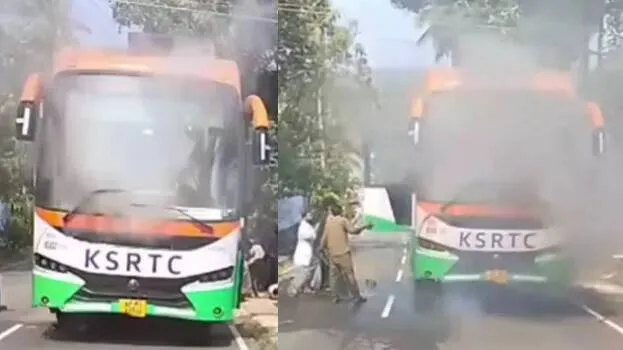
THIRUVANANTHAPURAM: The current state of the Kerala State Road Transport Corporation (KSRTC) can be summed up by an old adage: "An elephant can be bought, but there is no money for an ankus." While the corporation has introduced modern buses equipped with high-end facilities, they remain vulnerable to disaster; a single spark is currently enough to burn these new investments to the ground.
The risks became reality on August 30, when a new sleeper bus—launched with much fanfare just eight days earlier—caught fire at Venjaramoodu. Local residents rushed to the scene, attempting to douse the flames with buckets of water from nearby houses. Because the incident occurred in the morning, a major tragedy was narrowly averted. However, the event highlighted a glaring omission: many KSRTC buses currently on the road lack adequate fire extinguishing systems.
Evidence suggests that KSRTC purchased these buses without adhering to Central Government safety norms.
The Motor Vehicles Department (MVD) initially blocked the registration of 25 new buses due to the absence of fire extinguishing systems. However, the state government intervened by issuing an order granting a six-month relaxation of the standard bus body codes.
While KSRTC requested this relaxation for its own fleet, private bus owners also exploited the loophole, leading to a widespread bypass of critical passenger safety conditions.
Under the current legal framework, all buses entering service after August 2025 must strictly adhere to the following safety protocols:
Certification and Compliance
Structural Integrity and Testing
Performance and Quality Assessment





 HOME
HOME LATEST
 NOTIFIED NEWS
 POLL
POLL KERALA
  EDITORIAL
  INDIA
INDIA  WORLD
WORLD  CINEMA
  SPORTS
  LIFESTYLE
  SPECIAL
  SCIENCE & TECHNOLOGY
 |
|