

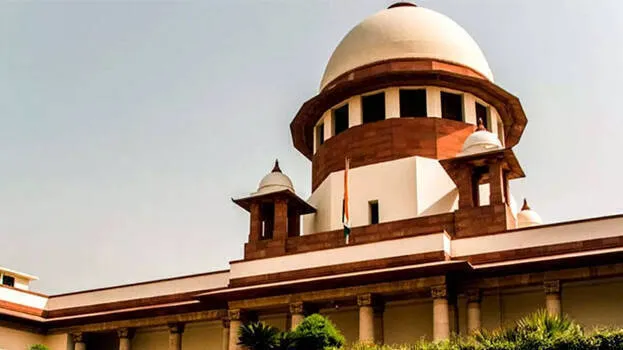
NEW DELHI: The Supreme Court has expressed doubt regarding the extent to which the state can interfere in religious rituals under the guise of social reform. The Court noted that it cannot issue general guidelines specifying when or how much the state can intervene; instead, judicial intervention will depend on the specific facts of each case. These observations were made by a nine-judge Constitution Bench while hearing arguments on matters of faith, including the entry of women into Sabarimala.
While the Constitution guarantees that legislation can be enacted for the purpose of social reform, the expanded bench, led by Chief Justice Surya Kant, responded when arguments arose regarding the limits of such powers. The Chief Justice stated that this is a subject requiring detailed discussion. He noted that while the State has the authority to address social evils, judicial intervention must be dictated by the merits and context of each individual case.
Justice B.V. Nagarathna, the only female judge on the bench, questioned whether legislation permitting women's entry into Sabarimala—cited as social reform—would constitute an encroachment into religious customs. Her query came as various organisations argued that courts should stay out of matters of faith. Doubts were also raised about whether religious beliefs and faiths could be challenged through Public Interest Litigations (PILs). The hearing is set to continue today.





 HOME
HOME LATEST
 NOTIFIED NEWS
 POLL
POLL KERALA
  EDITORIAL
  INDIA
INDIA  WORLD
WORLD  CINEMA
  SPORTS
  LIFESTYLE
  SPECIAL
  SCIENCE & TECHNOLOGY
 |
|