


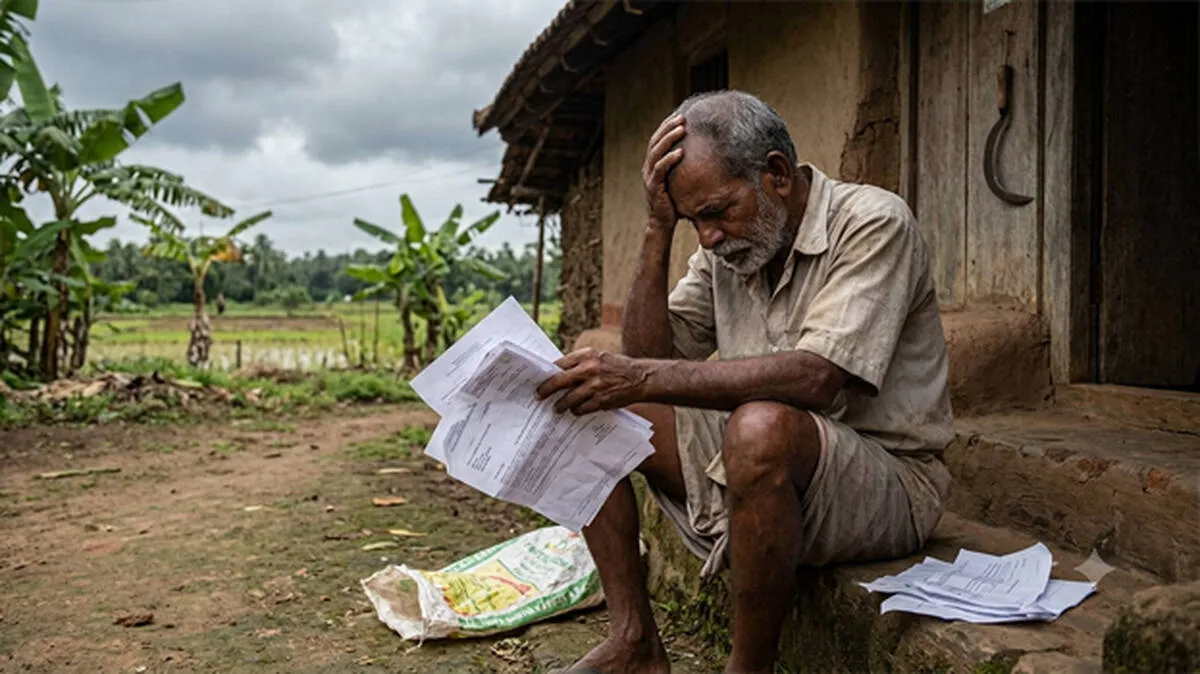
The disturbing revelation that Kerala’s farmers are yet to receive Rs 326 crore in sanctioned debt relief, leaving nearly 35,000 of them facing the grim threat of foreclosure, should profoundly shake not just the state leadership but the collective conscience of society. One does not need to look far for evidence of the agrarian community's acute distress; over the past few years, they have been battered by a relentless cascade of crises. Accelerating climate change, escalating human-wildlife conflicts, crashing commodity prices, soaring fuel costs, and the catastrophic disruptions of the pandemic and consecutive floods have combined to push farmers into an exceptionally precarious existence. Kerala has previously witnessed dark eras where farmers, crushed by the impossibility of sustaining their livelihood, routinely resorted to suicide—a grim reality that the state cannot afford to let return.
Until 2006, the plight of Kerala’s distressed farmers routinely captured national headlines, drawing painful comparisons to the agrarian crisis and cotton farmer suicides in Vidarbha. Back then, more than 1,500 farmers in the state, unable to endure their wretched circumstances, sought refuge in suicide. It was the then-incoming V.S. Achuthanandan government that took the historic step of establishing the Agricultural Debt Relief Commission—a first in post-independence India designed to evaluate the depth of individual distress and provide institutional relief. This decisive intervention successfully arrested the tide of suicides and eventually compelled the Central government to implement a broader agricultural debt waiver.
The current situation demands a similar measure of empathy, yet institutional response remains chillingly indifferent. A stark reminder of this apathy was seen in the wake of the devastating Mundakkai-Chooralmala landslide disaster on July 30, 2024. Despite a unified clamour from across Kerala to waive the agricultural loans of the survivors, financial institutions adopted a cold, Shylockian stance, flatly refusing to write off the debts. Ultimately, the state government had to step in and assume the entire financial liability. Such measures are rooted in the fundamental understanding that farmers are the true backbone of the nation. A similarly urgent, compassionate intervention is required from the government right now.
As the poet poignantly observed, the lives of these 35,000 farmers are currently suspended "like an agonised cry between suicide and murder," and the responsibility to offer them a lifeline rests squarely with the state. If the Agricultural Debt Relief Commission, the very body instituted to act as a shield for farmers, is failing to deliver timely relief, the government must order an immediate inquiry. It is deeply alarming to note reports indicating that the Commission has not accepted new applications since March 31, 2016, and that the crucial cabinet approval required to extend this deadline is not even under active consideration. Farmer organisations point out that nearly two and a half lakh applications remain unsubmitted simply because the Commission refuses to accept them.
Against this bleak backdrop, the Chief Minister and the Agriculture Minister must intervene on a war footing. The festival of Onam, which celebrates the harvest and the bounty brought forth by the tiller, is barely a month away. In such a season, it would be a catastrophic moral failure if the very people who toil to feed the state are driven to a piece of rope or a drop of poison out of sheer despair. The state government must act swiftly and decisively. It must not let its intervention become a meaningless gesture, akin to applying fertiliser after the crop has already gone to seed. Relief must arrive now, before it is tragically too late.















 HOME
HOME LATEST
 NOTIFIED NEWS
 POLL
POLL KERALA
  EDITORIAL
  INDIA
INDIA  WORLD
WORLD  BUSINESS
  CINEMA
  SPORTS
  LIFESTYLE
  SPECIAL
  SCIENCE & TECHNOLOGY
 |
|