


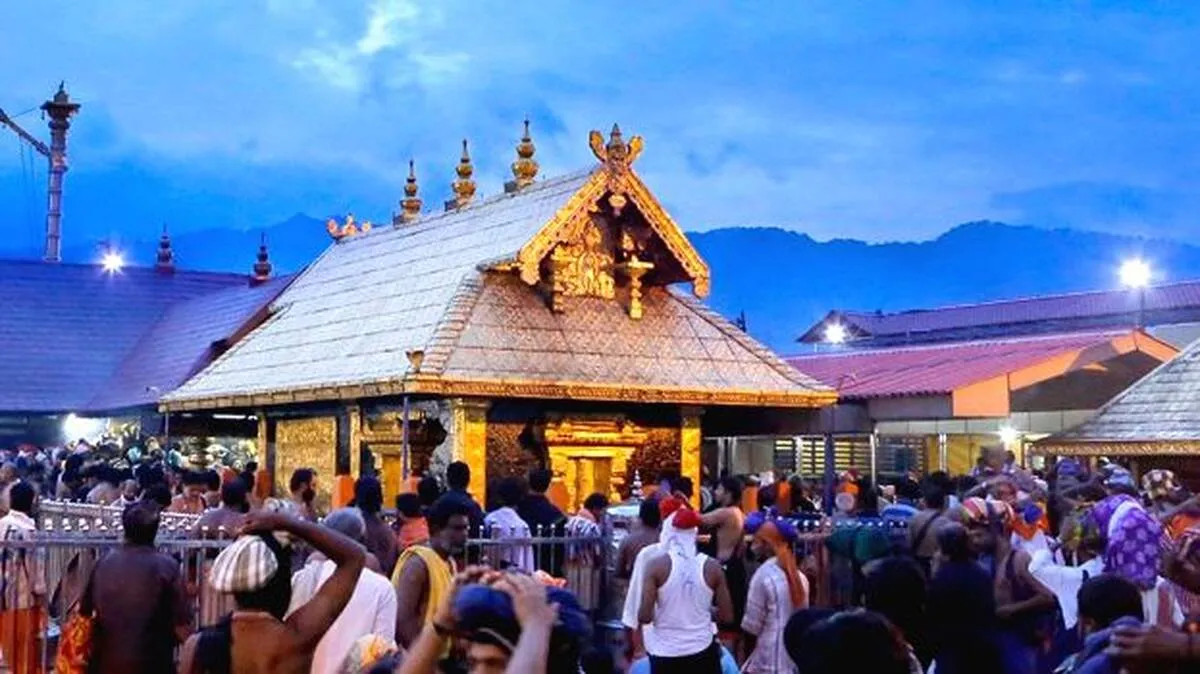
With only one and a half months left for the Sabarimala pilgrimage season to begin, this should be the time to hear good news about preparations and additional facilities. Instead, reports of corruption continue to emerge. The details of the scrap auction scam, which we exposed the other day, clearly show the extent of corruption at Sabarimala. The Devaswom Board’s decision to cancel the auction after our reporter V.A. Gireesh’s report exposed the alleged lakhs-worth scam involving Devaswom employees and contractors is a welcome first step.
It was also Kerala Kaumudi that recently reported how Devaswom officials and contractors had colluded to manipulate the tender process for shops at Sabarimala. The Board suspended R. Rejimon, head clerk at the Sabarimala Executive Office, in connection with the incident and has begun a detailed investigation. Although collusion between Devaswom officials and contractors at Sabarimala is not new, this is the first reported instance of officials themselves leaking tender documents to regular contractors. After learning that information had been leaked, the Board initially cancelled the e-auction for 110 shops. This was followed by our report on September 28 that officials of the Sabarimala section of the Devaswom Commissioner’s Office and the Sabarimala Executive Office were allegedly behind the leak.
Our report titled ‘Scrap sale scam at Sabarimala? Government steps in, Clean Kerala to collect scrap’ was published on September 30. The scam involved the Board’s engineering wing inviting quotations and finalising the auction instead of calling an e-tender. Regular contractors would participate in the auction and quote low amounts. The profits would then allegedly be shared by officials and contractors. The strategy was to bypass the e-tender process, as collusion would not have been possible otherwise. From now on, the government-owned Clean Kerala Company will collect scrap from Sabarimala, Pampa and Nilakkal. The new arrangement will allow the company itself to conduct the auction. Seventy per cent of the revenue will go to the Board, while the remaining amount will go to Clean Kerala Company. Private contractors have also been completely excluded from the scrap auction.
Since decisions on how auctions at Sabarimala should be conducted and their implementation were entirely in the hands of officials, such collusion had continued without much difficulty for so long. With officials now under suspicion and departmental action having begun, this can be considered the beginning of a cleansing process. Every auction related to Sabarimala must be closely monitored. Those found to be involved in irregularities should be brought before the law, with the aim of completely ending the unholy nexus between officials and contractors. A unified monitoring system could also be considered to oversee e-tendering processes conducted by different departments. Devaswom Minister K. Muraleedharan has fully supported the reform measures being taken by Board president K. Jayakumar. There is, therefore, reason to hope that the corruption tarnishing the sanctity of Lord Ayyappa’s abode will finally come to an end.













 HOME
HOME LATEST
 NOTIFIED NEWS
 POLL
POLL KERALA
  EDITORIAL
  INDIA
INDIA  WORLD
WORLD  BUSINESS
  CINEMA
  SPORTS
  LIFESTYLE
  SPECIAL
  SCIENCE & TECHNOLOGY
 |
|