


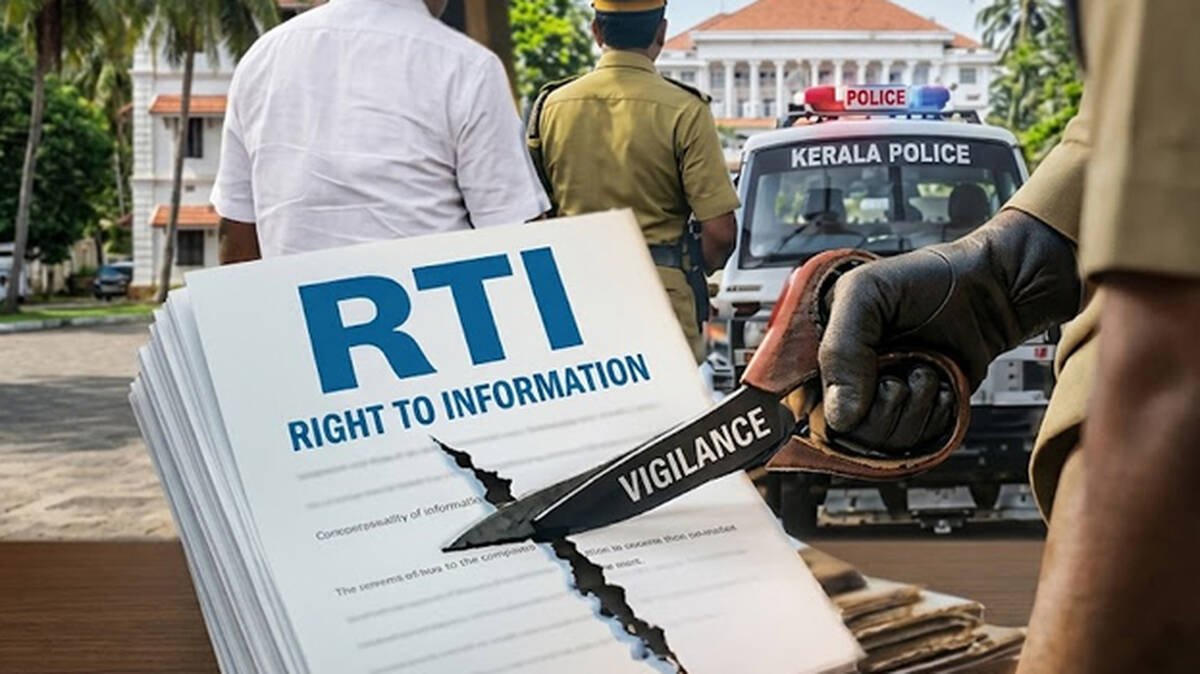
THIRUVANANTHAPURAM: The exemption of two sections of the Vigilance Department from the purview of the Right to Information (RTI) Act could prevent information about corruption cases against senior officials from coming to light. The most significant of the two is the T-2 (Top Secret) section, which handles cases involving the Chief Minister, ministers, MPs, MLAs and IAS and IPS officers. The other is the T-1 section, which maintains intelligence information on corrupt individuals.
Files that the government wants to keep confidential could be shifted to these sections, potentially undermining the public's right to information. Section 24 of the RTI Act allows central and state intelligence and security organisations to be exempted from the Act. However, the provision cannot be used to exempt individual sections within an office from the purview of the law. At present, 25 central agencies, including the Intelligence Bureau (IB), Research and Analysis Wing (RAW), Central Bureau of Investigation (CBI), Border Security Force (BSF), Central Reserve Police Force (CRPF) and National Security Guard (NSG), enjoy partial exemption. Even these agencies are required to disclose information relating to corruption, human rights violations and custodial deaths. The CBI also provides information that does not affect national security or adversely impact an ongoing investigation.
The Vigilance Department's RTI exemption was introduced under the pretext of exemptions granted to security and intelligence agencies. Earlier, a notification had been issued exempting eight institutions, including forensic laboratories and the Fingerprint Bureau, as well as certain police sections, from the purview of the RTI Act.
When RTI queries concern the government or senior officials, the strategy is to transfer the files to T-sections. Even information about the police department's hired helicopter had been withheld using this provision. In 2017, the state government approached the High Court arguing that it was not obliged to disclose Cabinet decisions. The government subsequently backed away from the issue after it triggered controversy.
The following categories of information may be exempted from disclosure under the applicable provisions of the law:












 HOME
 LATEST
 NOTIFIED NEWS
 POLL
 KERALA
 EDITORIAL
 INDIA
 WORLD
 BUSINESS
 CINEMA
 SPORTS
 LIFESTYLE
 SPECIAL
 SCIENCE & TECHNOLOGY

 |