


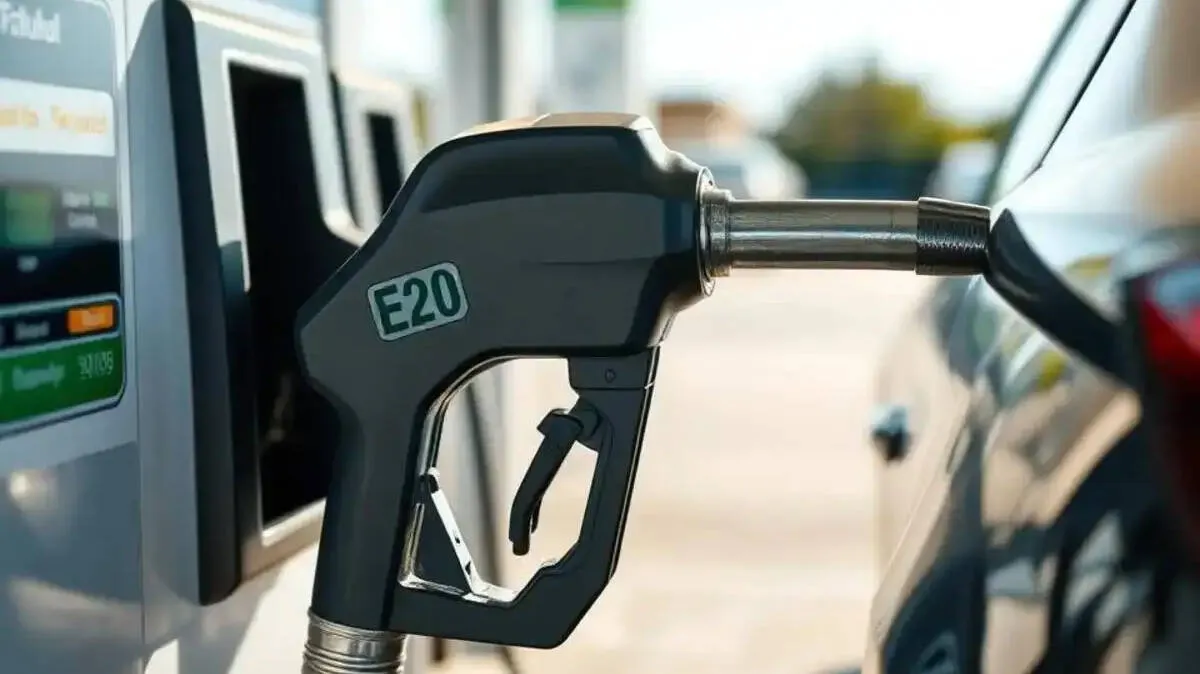
E20 petrol has become a talking point among motorists across India as ethanol blending in petrol reaches the 20 per cent level. Average ethanol blending reached 20 per cent during the 2025-26 Ethanol Supply Year, according to the Centre. The government has also said that no decision has been taken to increase the nationwide blending level beyond 20 per cent at present.
While E20 has been at the centre of discussions over vehicle compatibility and fuel quality, there are also claims that petrol may sometimes contain more than 20 per cent ethanol. These remain claims and cannot be treated as established fact without proper testing.
If you are curious about the ethanol content of the petrol you have purchased, there is a simple water-separation method that can give you an indication. The principle behind it is straightforward. Ethanol mixes more readily with water than petrol does. When water is added to ethanol-blended petrol and the mixture is shaken, some of the ethanol moves into the water. Once the mixture settles, the water and extracted ethanol form the lower layer while petrol remains above it.
A water-extraction procedure based on this principle is also documented by IndianOil for testing ethanol-blended Motor Gasoline.
IndianOil's documented procedure uses a graduated, stoppered glass cylinder and specifies precisely 30 ml of water for a 100 ml fuel sample.
The test starts with 30 ml of water. Therefore, any increase in the volume of the lower aqueous layer represents ethanol that has moved into the water.
For example, if the lower layer measures 50 ml after separation, the increase over the original 30 ml is 20 ml.
However, this figure should not simply be treated as an exact ethanol percentage. IndianOil's formal procedure uses a standard calibration plot prepared with samples containing known ethanol concentrations to determine the corresponding ethanol content.
In other words, the water-separation test can provide an indication of the ethanol content, but it is not an authoritative laboratory measurement. If the exact composition of the fuel needs to be established, a proper laboratory test is required.














 HOME
HOME LATEST
 NOTIFIED NEWS
 POLL
POLL KERALA
  EDITORIAL
  INDIA
INDIA  WORLD
WORLD  CINEMA
  SPORTS
  LIFESTYLE
  SPECIAL
  SCIENCE & TECHNOLOGY
 |
|