

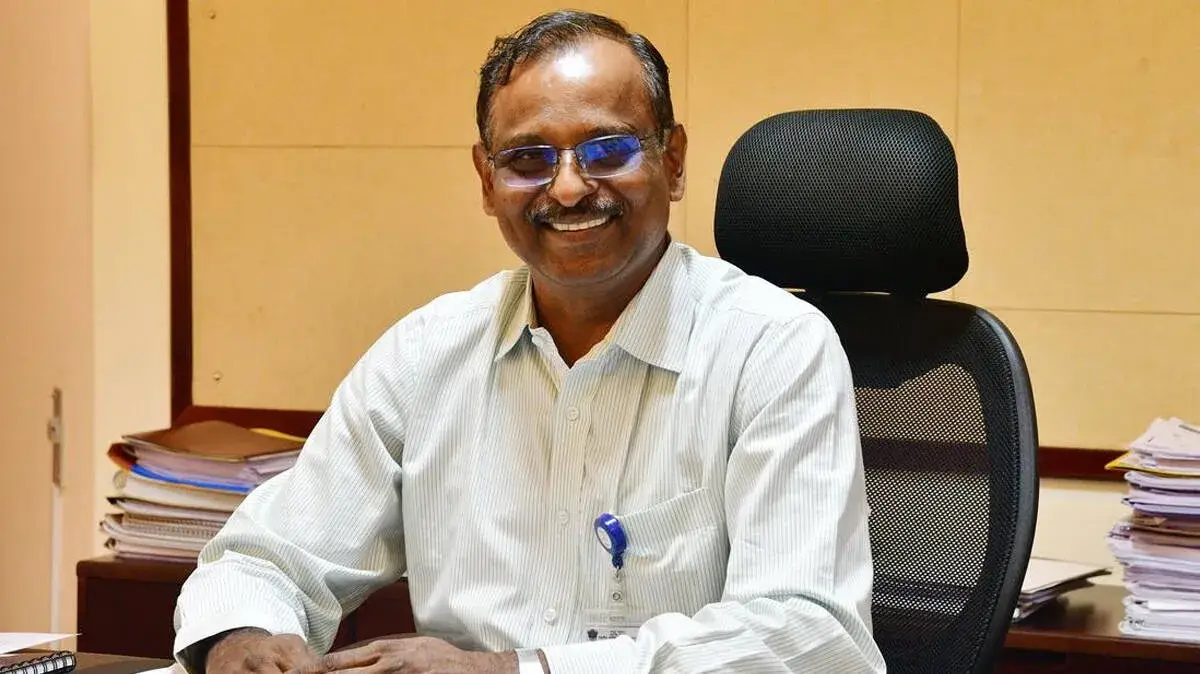
SRIHARIKOTA: ISRO Chairman V Narayanan said the launch of the first uncrewed mission under Gaganyaan, India’s ambitious programme to send humans into space, will happen this year itself. He said work related to the mission is progressing rapidly. He was speaking after the successful launch of the EOS-05 Earth observation satellite aboard the GSLV-F17 rocket.
This is ISRO’s first success in the present financial year. Narayanan said the space agency is also targeting six more launches during the financial year, including the NVS-03 navigation satellite. He dismissed claims that the newly launched EOS-05 is a spy satellite. He also said that EOS-05 has an operational life of nine years.
The launch vehicle performed better than expected. While the satellite was initially expected to be placed in an orbit at an altitude of around 29,000 km, it was successfully placed in an orbit of 171 km × 31,026 km, Narayanan said.
The EOS-05 satellite was launched Friday morning at 2:55 am from the second launch pad of Satish Dhawan Space Centre in Sriharikota, Andhra Pradesh. Unlike conventional remote-sensing satellites, which generally operate at relatively low altitudes, EOS-05 has been placed in an orbit at an altitude of around 36,000 km.
Being positioned at a higher orbit will allow the satellite to move in sync with the Earth’s rotation, keeping it almost continuously positioned over India. It will observe India approximately once every half hour and transmit images and data. EOS-05 will help in the accurate early detection and monitoring of forest fires, cyclones, cold waves and changes in cloud patterns. This is expected to provide a major boost to weather monitoring and disaster management.
While other satellites may monitor the same location, the new satellite will be capable of shifting its focus to different parts of India. This flexibility is expected to be another major advantage for the country.







 HOME
HOME LATEST
 NOTIFIED NEWS
 POLL
POLL KERALA
  EDITORIAL
  INDIA
INDIA  WORLD
WORLD  CINEMA
  SPORTS
  LIFESTYLE
  SPECIAL
  SCIENCE & TECHNOLOGY
 |
|