


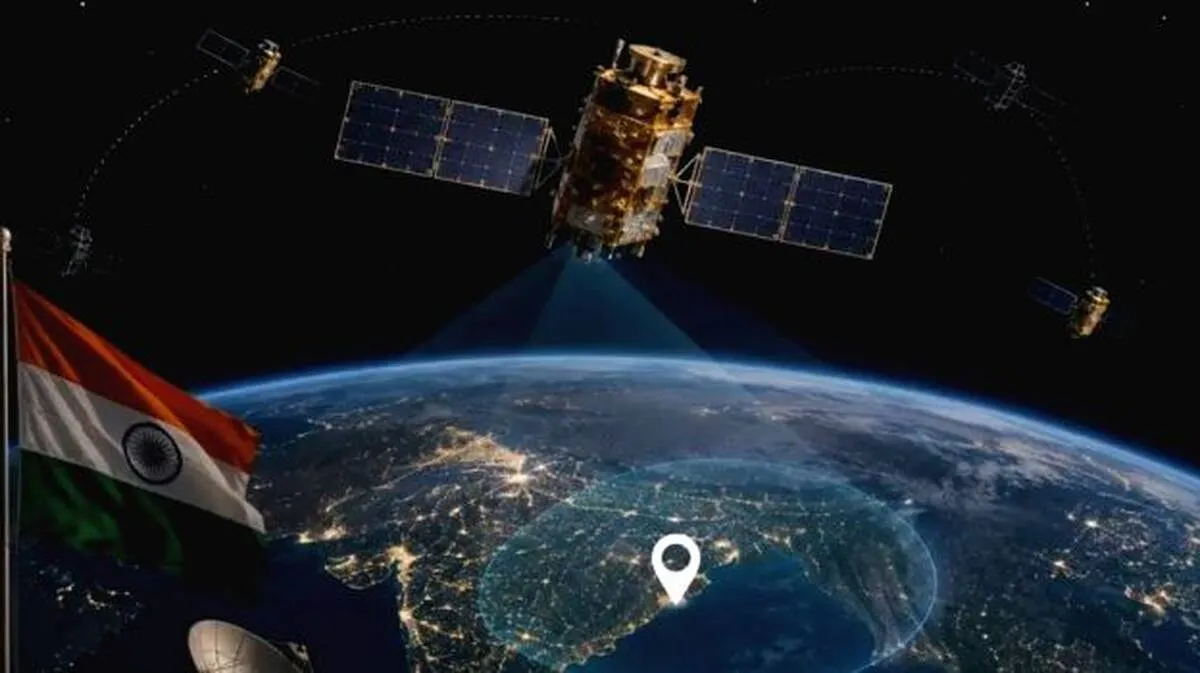
THIRUVANANTHAPURAM: India’s own navigation system, NavIC, used for military purposes as well as ship and air navigation, is facing a crisis, prompting urgent efforts to launch a new satellite. A disruption of NavIC could also affect the country’s defence sector.
Considering the situation, the Centre has directed ISRO to launch a new NavIC satellite at the earliest, even if it means postponing the uncrewed launch planned under Gaganyaan. NavIC operates with four satellites active in space at the same time. The current crisis has been caused by two satellites becoming non-functional after completing their service life. Urgent efforts are now underway to launch NavIC’s new satellite, NVS-03, within weeks. The F-18 rocket of the GSLV Mk II series has been kept ready at Sriharikota, while construction of the satellite is in its final stage. NavIC will become fully operational after NVS-04 and NVS-05 are also launched. The 2.2-tonne satellite will have a service life of 10 years.
Instead of the Swiss-made clock used so far, the new satellite will use an atomic clock developed by the Space Applications Centre in Ahmedabad for greater timing accuracy. NavIC is India’s satellite navigation system, developed as an alternative to the US GPS, Russia’s GLONASS, Europe’s Galileo and China’s BeiDou. The system was launched in 2013. Although 11 NavIC satellites have been launched, seven became non-functional due to problems with their atomic clocks.
Located 36,000 km above the Earth’s surface, over the equator at 0° latitude.
It takes 24 hours to orbit the Earth. When viewed from Earth, it appears to remain stationary.
It takes 24 hours to orbit the Earth. It is positioned at a slight inclination to the equator and appears to move.















 HOME
HOME LATEST
 NOTIFIED NEWS
 POLL
POLL KERALA
  EDITORIAL
  INDIA
INDIA  WORLD
WORLD  BUSINESS
  CINEMA
  SPORTS
  LIFESTYLE
  SPECIAL
  SCIENCE & TECHNOLOGY
 |
|