

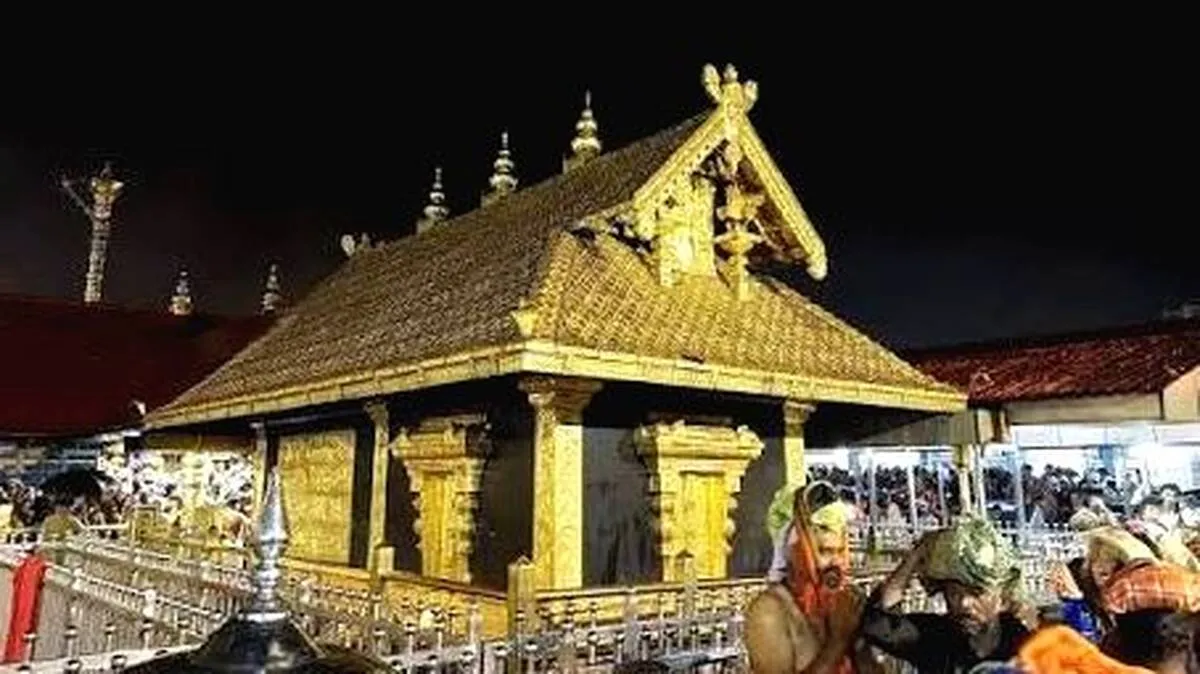
NEW DELHI: The Supreme Court’s nine-judge Constitution Bench is likely to deliver its verdict by October 6 on a batch of cases concerning religious freedom and practices, including the constitutional questions arising from the Sabarimala women’s entry case. Chief Justice Surya Kant indicated the possibility on Tuesday while hearing a batch of pleas challenging provisions of the Bodh Gaya Temple Act, 1949. The matter was deferred to October 6 after lawyers sought that it be taken up after the verdict in the Sabarimala reference case.
The nine-judge Bench, headed by CJI Surya Kant, conducted hearings for 16 days before reserving its judgment on May 14. The Bench also comprises Justices B V Nagarathna, M M Sundresh, Ahsanuddin Amanullah, Aravind Kumar, Augustine George Masih, Prasanna B Varale, R Mahadevan and Joymalya Bagchi.
The reference involves seven broader constitutional questions concerning religious freedom, the rights of religious denominations and the extent to which religious practices can be subjected to constitutional scrutiny. The issues arose from the review petitions challenging the Supreme Court’s 2018 judgment allowing women of all ages to enter the Sabarimala temple.
The wider reference also encompasses questions arising from challenges to practices including female genital mutilation in the Dawoodi Bohra community and the exclusion of Parsi women married to non-Parsis from certain religious institutions.
The review petitions were kept pending in 2019 after a five-judge Constitution Bench referred broader questions concerning the interpretation of Articles 25 and 26 and the relationship between religious practices and fundamental rights to a larger Bench. The nine-judge Bench is now examining those questions.
What is the scope and ambit of the right to freedom of religion under Article 25 of the Constitution?
What is the interplay between the rights of persons under Article 25 and the rights of religious denominations under Article 26?
The seven questions form the broader constitutional framework within which the Sabarimala review petitions and other disputes over religious practices are being considered.










 HOME
HOME LATEST
 NOTIFIED NEWS
 POLL
POLL KERALA
  EDITORIAL
  INDIA
INDIA  WORLD
WORLD  BUSINESS
  CINEMA
  SPORTS
  LIFESTYLE
  SPECIAL
  SCIENCE & TECHNOLOGY
 |
|