


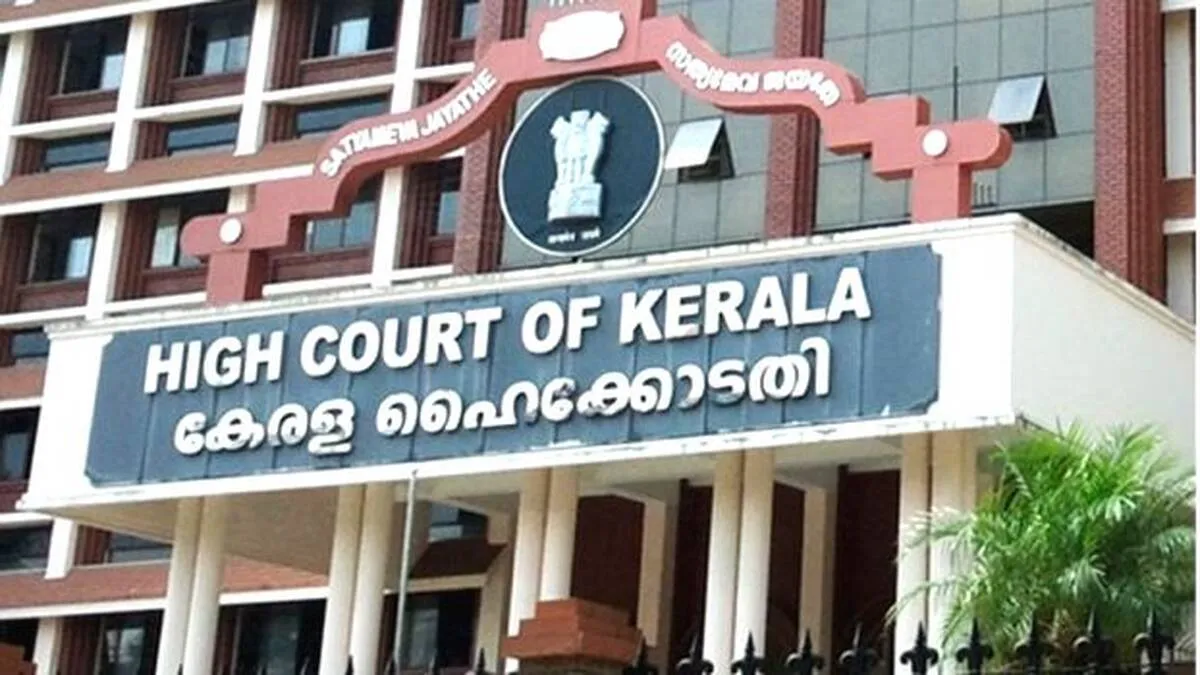
KOCHI: The Kerala High Court has warned the government and the Public Service Commission (PSC) against joining hands to protect each other in the investigation into alleged irregularities in the Planning Board recruitment process. The court pointed out that the government had done little to advance the probe, while the main accused had not been questioned and crucial documents had not been seized.
"What kind of investigation is this?" Justice A. Badharudeen asked orally.
The single bench was hearing a petition filed by the PSC seeking to quash the Crime Branch investigation. The court sought an explanation from the government on the progress of the probe. Director General of Prosecution T. Asaf Ali informed the court that although notices had been issued to those facing allegations, the PSC was not cooperating with the investigation. This prompted strong criticism from the court.
"What would happen if this were a murder case? Wouldn't the accused be arrested if they refused to cooperate? Shouldn't the established procedures be followed?" the court asked. It observed that the investigation appeared to have been stalled or neglected under the cover of the petition filed by the PSC.
The court clarified that it had not imposed any restrictions on the investigation and that the government was free to continue the probe. It said there was no point in the government and the PSC playing 'bhai-bhai' when dealing with a serious case.
The court also warned that when two parties who are expected to confront each other join hands, people begin looking for a third alternative. Such an alternative could gain public support, and the government should understand that this could happen in Kerala. The court stressed the need to be aware of public sentiment.
Following the court's intervention, changes were made to the rank list for the appointment of the Planning Board Chief. Shyam Krishnan, who was initially placed third, was moved to the first rank. Arun J. Pratap, who had secured the first rank and received the appointment, was pushed down to fifth place after revaluation. V.S. Jayalal, who had first raised a complaint against the rank list, was impleaded in the case at the PSC's request. The petition will be considered again on the 27th.
The court also criticised the requirement of prior approval for investigating corruption cases against public servants. It compared the condition to the demand made by Shylock in the famous story that he be allowed to cut a pound of flesh without shedding any blood.
The single bench observed that Section 17A of the Prevention of Corruption Act was effectively rendering other provisions of the law ineffective. It questioned how bribery cases could be registered if prior approval was mandatory. The court described the provision as an unnecessary restriction that tied the hands of investigating officers.
Following the High Court's strong criticism, the Crime Branch has issued fresh notices to PSC members, directing them to appear for questioning in the Planning Board recruitment scam. They have been asked to appear at the Crime Branch headquarters on Monday, Tuesday and Wednesday. If they fail to appear, the court will be informed and summons will be issued.
The notices have been served on PSC members S.A. Saif, S. Sreekumar, C.K. Shajib and Stanley Thomas. Chairman M.R. Baiju will be questioned only after the examination of the members is completed. The offence in the case carries a punishment of up to life imprisonment or 10 years in prison along with a fine.















 HOME
 LATEST
 NOTIFIED NEWS
 POLL
 KERALA
 EDITORIAL
 INDIA
 WORLD
 BUSINESS
 CINEMA
 SPORTS
 LIFESTYLE
 SPECIAL
 SCIENCE & TECHNOLOGY

 |