


KANNUR: We’ve all wondered at some point if we’re actually getting what we pay for on grocery labels. For T.P. Ashiq, a resident of Ancharakandy in Kannur, that casual curiosity turned into a formal consumer court victory.
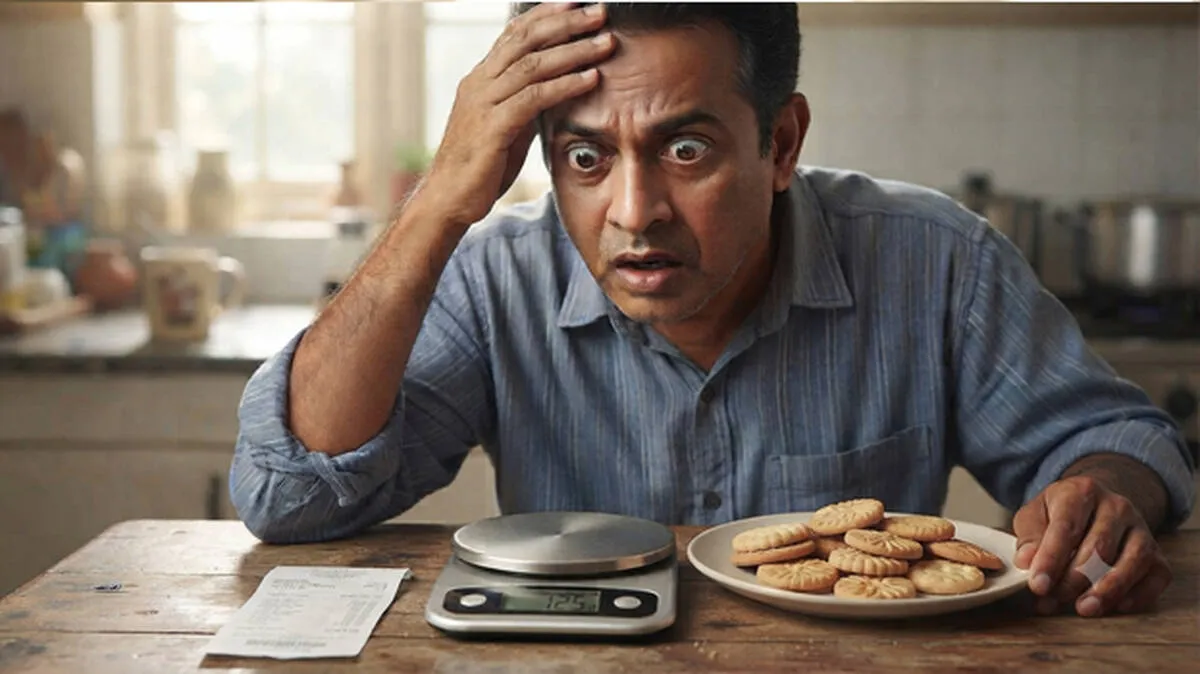
It started during a routine grocery trip on a July afternoon in Chakkarakkal. Ashiq picked up a standard packet of Parle 20-20 biscuits, paying a modest ₹20. But something felt off when he examined the item more closely. The packaging claimed to hold 150 grams of biscuits, but the actual weight clocked in at just 125 grams—falling short by a frustrating 25 grams.
Rather than brushing it off as a minor factory glitch, Ashiq decided to take his grievance to the Kannur District Consumer Disputes Redressal Commission, represented by his counsel, Adv. K.P. Muhammed Sinan.
When the case landed before the bench—comprising Commission President Ravi Susha and members Molikutty Mathew and K.P. Sajeesh—the complaint was met with official backing. The Legal Metrology Department examined the evidence and formally certified that the biscuit packet's weight was indeed lower than what was declared on the wrapper.
Faced with the findings, the corporate response quickly devolved into finger-pointing. Parle Biscuit Company flatly denied that the packet in question even belonged to them. Meanwhile, Metro Hypermarket—the retail store where Ashiq made the purchase on July 26, 2024—pushed back, arguing firmly that the responsibility for the weight discrepancy rested squarely on the manufacturer.
The Commission made it clear that neither party could escape accountability. In its ruling, the panel observed that selling an underweight product amounts to an unfair trade practice and a clear deficiency in service.
Crucially, the Commission noted that retail establishments carry a fundamental obligation to ensure that every product they hand over to a customer matches its advertised weight and quality. Shops cannot simply wash their hands of manufacturing defects.
The final verdict handed down a combined penalty of ₹50,000, split between the manufacturer and the retailer:
Parle Biscuit Company: Ordered to pay ₹25,000 in compensation alongside ₹10,000 for litigation costs (₹35,000 total).
Both entities were given a strict one-month window to clear the dues. To ensure compliance, the Commission added a penalty clause: should they fail to pay within the stipulated time, the ₹35,000 compensation portion will attract a 12 percent annual interest rate dating back to the day of the order.
It is a costly reminder that when it comes to consumer trust, even a missing pinch of biscuits can carry a heavy price tag.















 HOME
HOME LATEST
 NOTIFIED NEWS
 POLL
POLL KERALA
  EDITORIAL
  INDIA
INDIA  WORLD
WORLD  CINEMA
  SPORTS
  LIFESTYLE
  SPECIAL
  SCIENCE & TECHNOLOGY
 |
|