


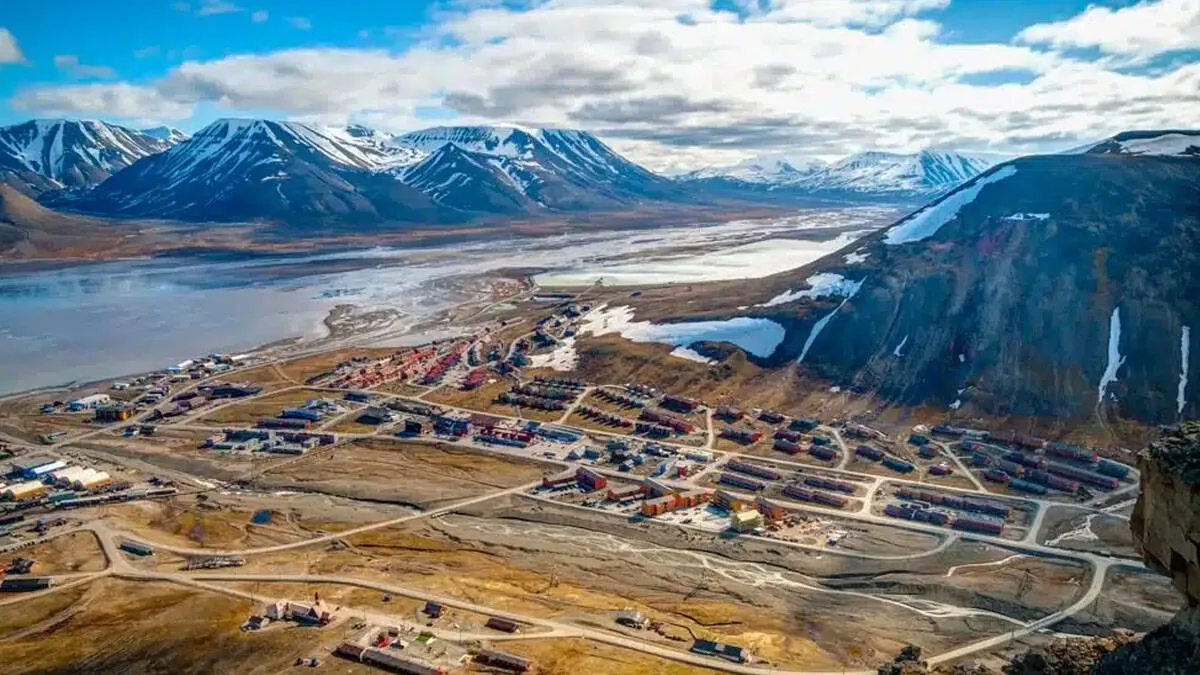
They say death arrives unannounced, catching us unaware of the time or place. But could you imagine a place where, even after life ends, you cannot be buried? Popularly dubbed the "city where death is banned," this chilling reality is a way of life in one of the planet's most extreme settlements.
Tucked away in Norway’s remote Svalbard archipelago, the small town of Longyearbyen sits roughly 1,300 kilometres from the North Pole. Nature here is harsh and uncompromising. From around April to August, the midnight sun keeps the town in continuous daylight for months, while the deep winter brings a long period of polar night, with no direct sunlight for weeks.
In this century-old community, dying is not actually illegal, despite the enduring nickname. The unusual restriction concerns what happens afterwards: traditional burials in Longyearbyen have long been limited because the area's permanently frozen ground makes it difficult for bodies to decompose naturally. New burials in the town's cemetery have effectively been stopped since around the middle of the 20th century.
The shift was driven by a startling reality beneath the frozen ground. Permafrost can preserve human remains for decades rather than allowing them to decompose normally. When researchers examined the remains of people who died during the devastating 1918 Spanish flu pandemic and were buried in Longyearbyen, they found that the frozen conditions had preserved biological material, including influenza viral genetic material.
The discovery offered a striking glimpse into just how effectively Svalbard’s frozen ground can preserve human remains. While researchers found influenza viral genetic material in the preserved tissue, there was no evidence that the 1918 virus remained infectious. The findings nevertheless underscored the unusual challenges posed by permafrost, where bodies can remain preserved for decades instead of decomposing naturally.
As a result, Longyearbyen is not designed as a traditional cradle-to-grave community. People requiring long-term care or medical services unavailable locally may need to move to mainland Norway, while those approaching the end of life are generally cared for on the mainland. If someone dies in Longyearbyen, the body is transported to the mainland for burial or other funeral arrangements.
So, while death itself is not banned in Longyearbyen, the frozen earth has made the final resting place an unusual problem — one that has shaped how the world's northernmost communities deal with life, death and everything in between.







 HOME
HOME LATEST
 NOTIFIED NEWS
 POLL
POLL KERALA
  EDITORIAL
  INDIA
INDIA  WORLD
WORLD  CINEMA
  SPORTS
  LIFESTYLE
  SPECIAL
  SCIENCE & TECHNOLOGY
 |
|