

KOCHI: On the banks of the Muvattupuzha River, along the border of Ernakulam and Kottayam districts, a nearly 10-acre stretch of land holds a remarkable collection of trees, some more than a century old. Among them is the rare adakka pine, a tree that has all but disappeared from parts of its native range.
Vettikadu Timber Depot, one of the oldest depots under Kerala’s Forest Department, was established by the British to store timber felled in the eastern forests. Its original purpose belongs to another era, but the grounds have acquired a distinct character over the years, with old trees and a variety of less common species growing across the property.
The depot’s exact year of establishment is not documented. Forest officials believe it dates to either the late 19th century or the early 20th century. A reminder of its long history survives on the office building, where the water level reached during the devastating floods of 1924 is still marked.
Among the trees that draw attention are century-old vettu, kanjiram, mahogany and native mango varieties. Forest personnel have also planted species such as maravuri, karimaram, nangu, beedi-leaf tree and neermathalam. In all, the grounds are home to around 50 varieties of trees.
The most unusual member of this collection, however, is the adakka pine.
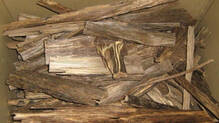
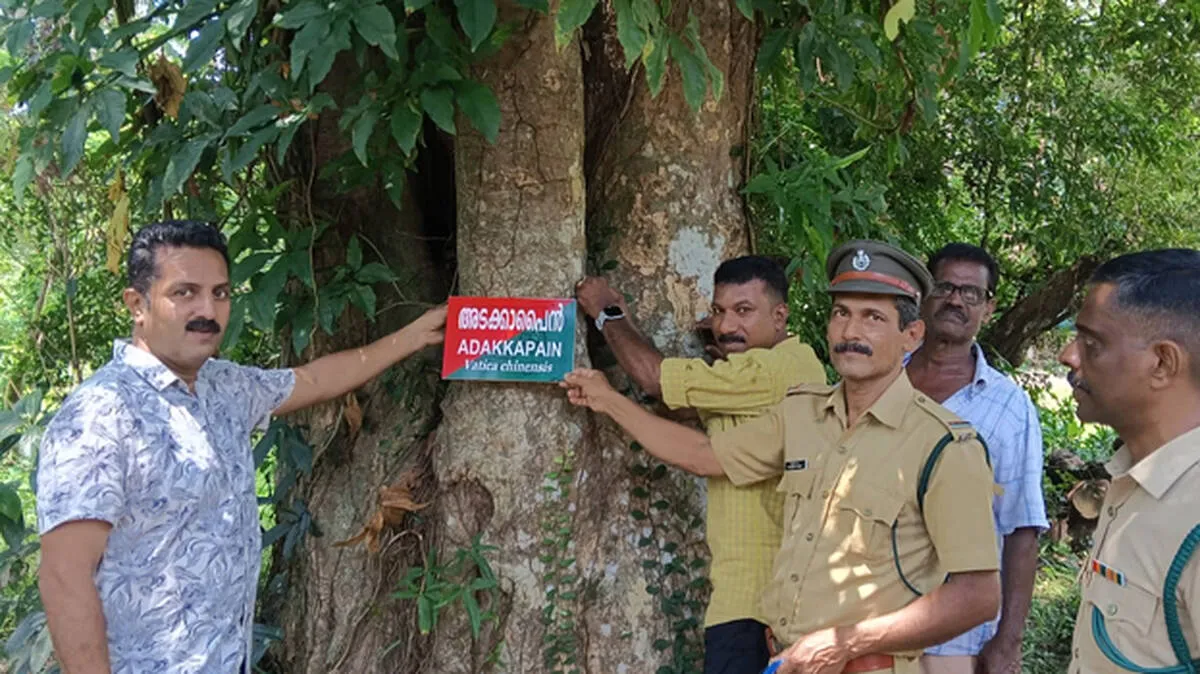
Scientifically known as Vatica chinensis, adakka pine is native to the Western Ghats and Sri Lanka. It is also known locally as cherupine, payinippasha and vellapine. The species is listed as extinct in Sri Lanka, making the trees that survive elsewhere particularly significant.
An evergreen species, adakka pine can grow up to 30 metres tall, with a trunk reaching three metres in diameter. It was once found in several sacred groves, known as kaavukal, but has become increasingly rare.
The tree also has a history of traditional medicinal use. Its leaves and resin were used in the preparation of Ayurvedic medicines, according to historical records. Its fruits resemble nutmeg.
For the Forest Department, preserving the species at Vettikadu is a matter of particular pride.
“Protecting adakka pine, a tree that cannot be found even in Kerala’s natural forests, is a great source of pride for the depot,” said Dr G. Prasad, Divisional Forest Officer.
The depot’s heritage extends beyond its trees. Its office building, which combines elements of traditional Kerala architecture and colonial design, is being preserved as a heritage monument. Its roof and pillars reflect the architectural styles that came together in the structure.
Vettikadu also has a connection to Chief Minister V.D. Satheesan’s family. His father, Damodara Menon, served as the depot officer between 1975 and 1980, according to former officials.
Today, the depot brings together several layers of history: its origins in the colonial timber trade, a building that retains traces of an earlier architectural era, trees that have stood for generations and a rare species whose survival gives the grounds particular botanical significance. At Vettikadu, the past is not preserved in documents and buildings alone. Some of it continues to grow, quietly, among the trees.















 HOME
HOME LATEST
 NOTIFIED NEWS
 POLL
POLL KERALA
  EDITORIAL
  INDIA
INDIA  WORLD
WORLD  BUSINESS
  CINEMA
  SPORTS
  LIFESTYLE
  SPECIAL
  SCIENCE & TECHNOLOGY
 |
|