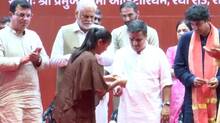


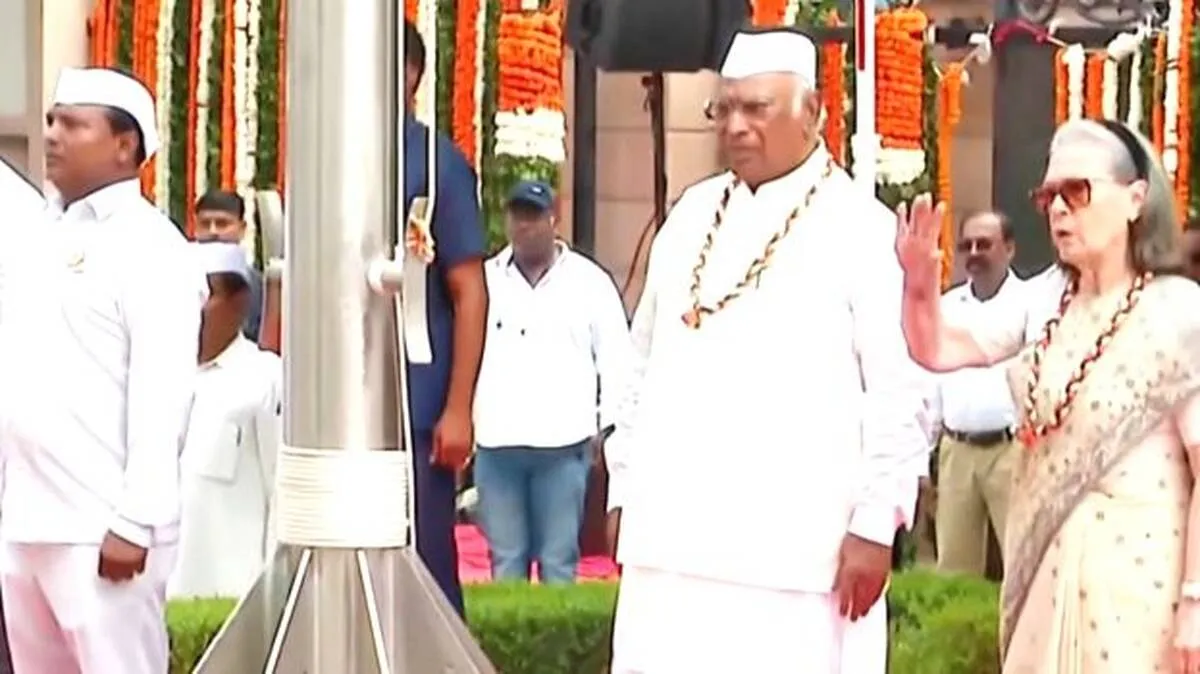
NEW DELHI: The full version of India's national song was heard in Delhi but not in Kerala. Earlier, Congress decided to ignore the new law, which made it mandatory to sing the national song during the 80th Independence Day celebrations, but the party ended up doing what it stood against. The entire song was sung at the function held at the AICC headquarters, while Sonia Gandhi and Mallikarjun Kharge’s attempts to stop the song midway failed, inviting brickbats.
BJP thus had a weapon placed right in their hands, and they used it well. The ruling party, mostly on the back foot since the CJP protest, were waiting for a chance to attack Congress. The BJP alleged that the Congress, which pursues a policy of appeasement, insulted the national song and demanded that they apologise to the country.
Vande Mataram was not sung at the Independence Day celebration attended by Chief Minister V.D. Satheesan at the Thiruvananthapuram Central Stadium while other Congress-ruled states of Karnataka, Telangana and Himachal Pradesh played the full version.
Ahead of the hoisting of the national flag at the AICC headquarters, the group appointed by the Seva Dal started singing Vande Mataram. Sonia, AICC President Kharge and Lok Sabha Opposition Leader Rahul, who were standing, became restless after two stanzas. Sonia and Kharge expressed their displeasure. Sonia moved away and raised her hand, beckoning to the Seva Dal leader.
By then, the last part was sung, including a reference to Durga. It is reported that Rahul and Sonia expressed their dissatisfaction with Seva Dal President B.Y. Srinivas.
1. Party General Secretary Jairam Ramesh explained that Sonia gestured with her hand to bring a chair for Kharge, and not to stop the national song.
2. Jairam Ramesh pointed out that the Congress Working Committee in 1937 decided to sing the first two stanzas on the instructions of Rabindranath Tagore
3. Vande Mataram was first sung on a political stage by Tagore at the Congress session held in Calcutta in 1896









 HOME
HOME LATEST
 NOTIFIED NEWS
 POLL
POLL KERALA
  EDITORIAL
  INDIA
INDIA  WORLD
WORLD  BUSINESS
  CINEMA
  SPORTS
  LIFESTYLE
  SPECIAL
  SCIENCE & TECHNOLOGY
 |
|